20 Shades of Blue
an interactive exhibition of text, images, memories, and heritage
Mar. 3rd – Mar. 29th. Morris Gallery at Missouri Valley College
Sept – Oct. Bunker Center for the Arts
Reminiscence, melancholy, lingering sorrow.
Industry, diligence, perseverance.
Royalty, esteem, pride.
As many shades of blue exist in the world, almost as many complicated symbols the color itself carries.
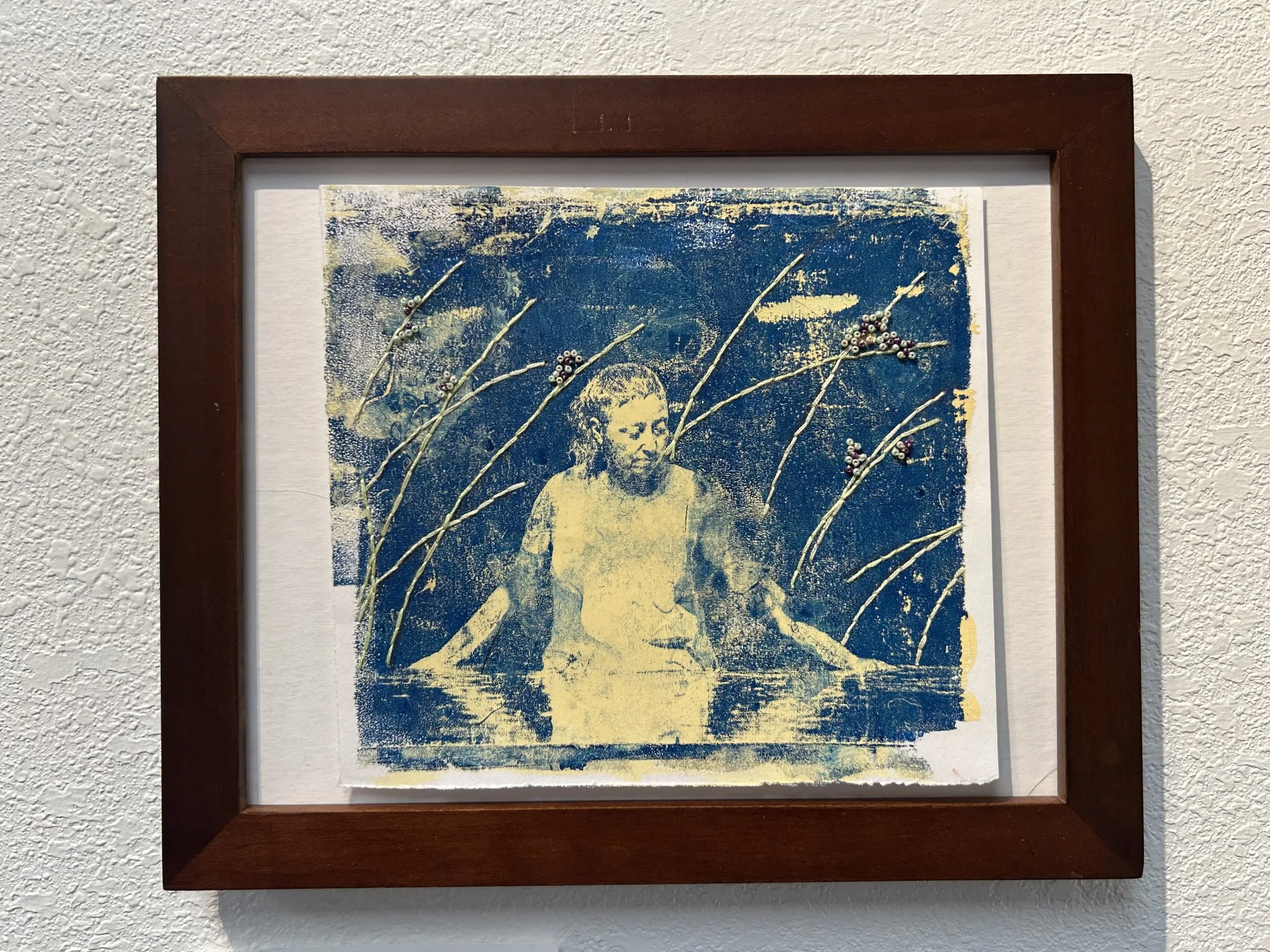
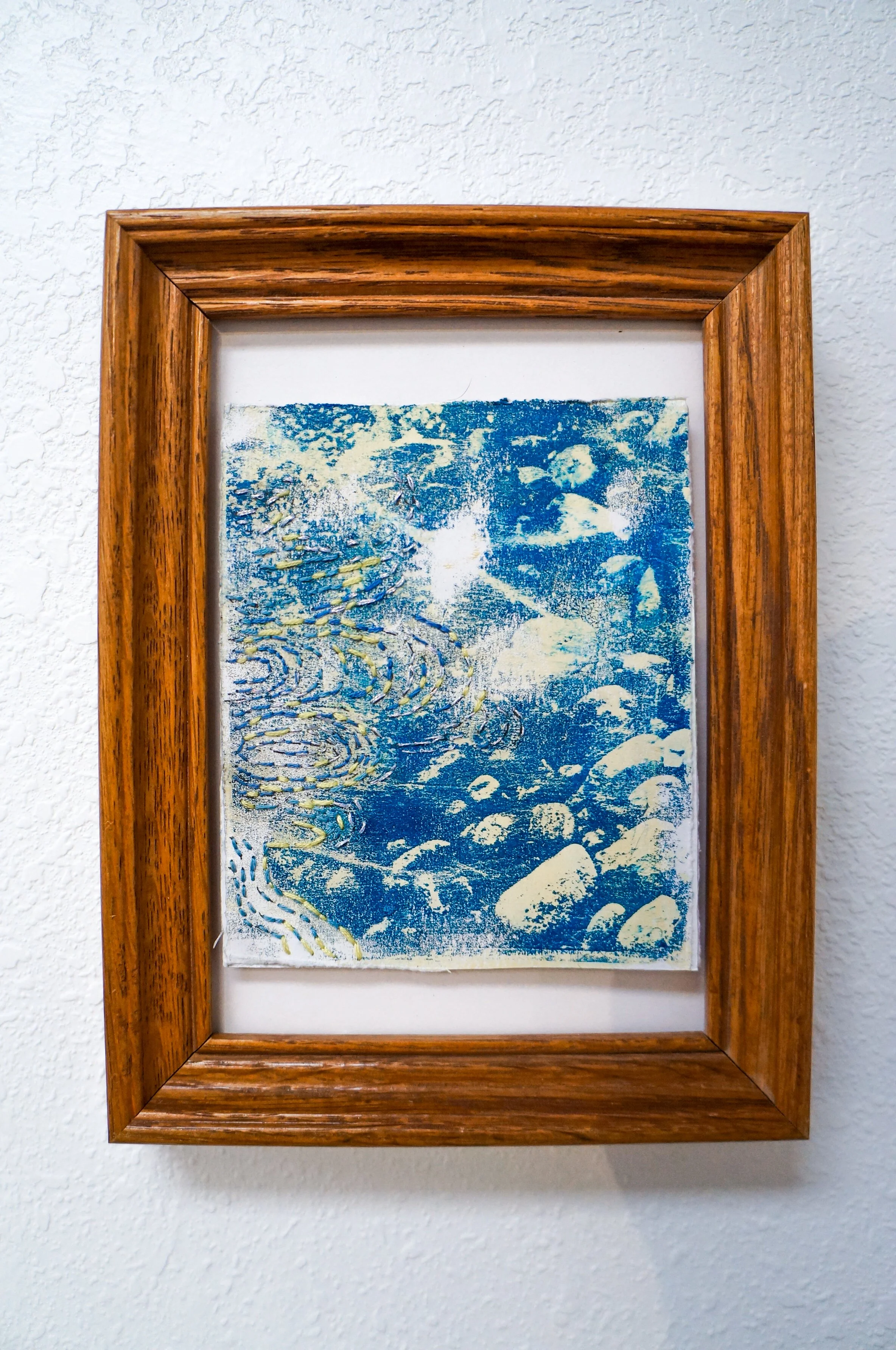
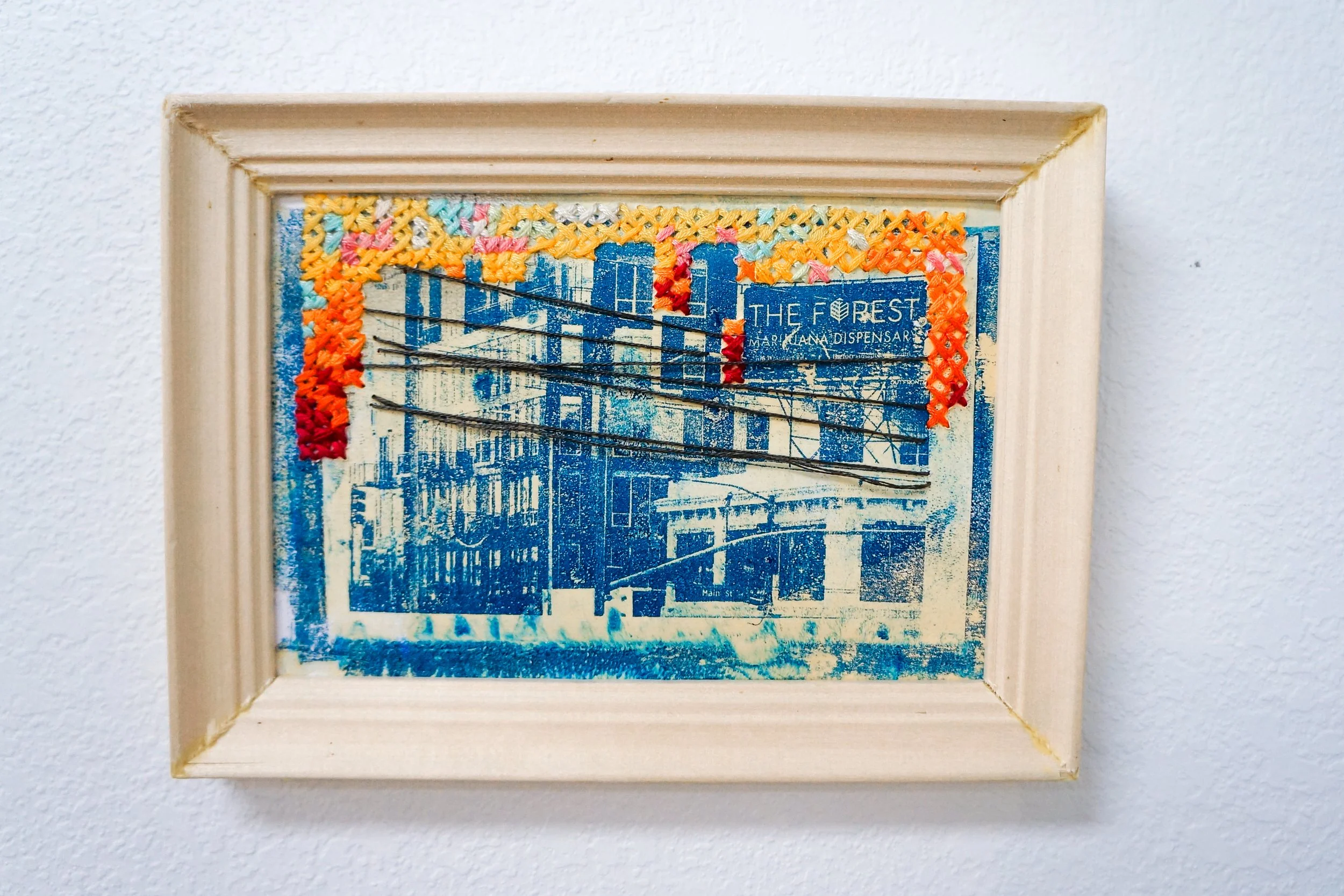
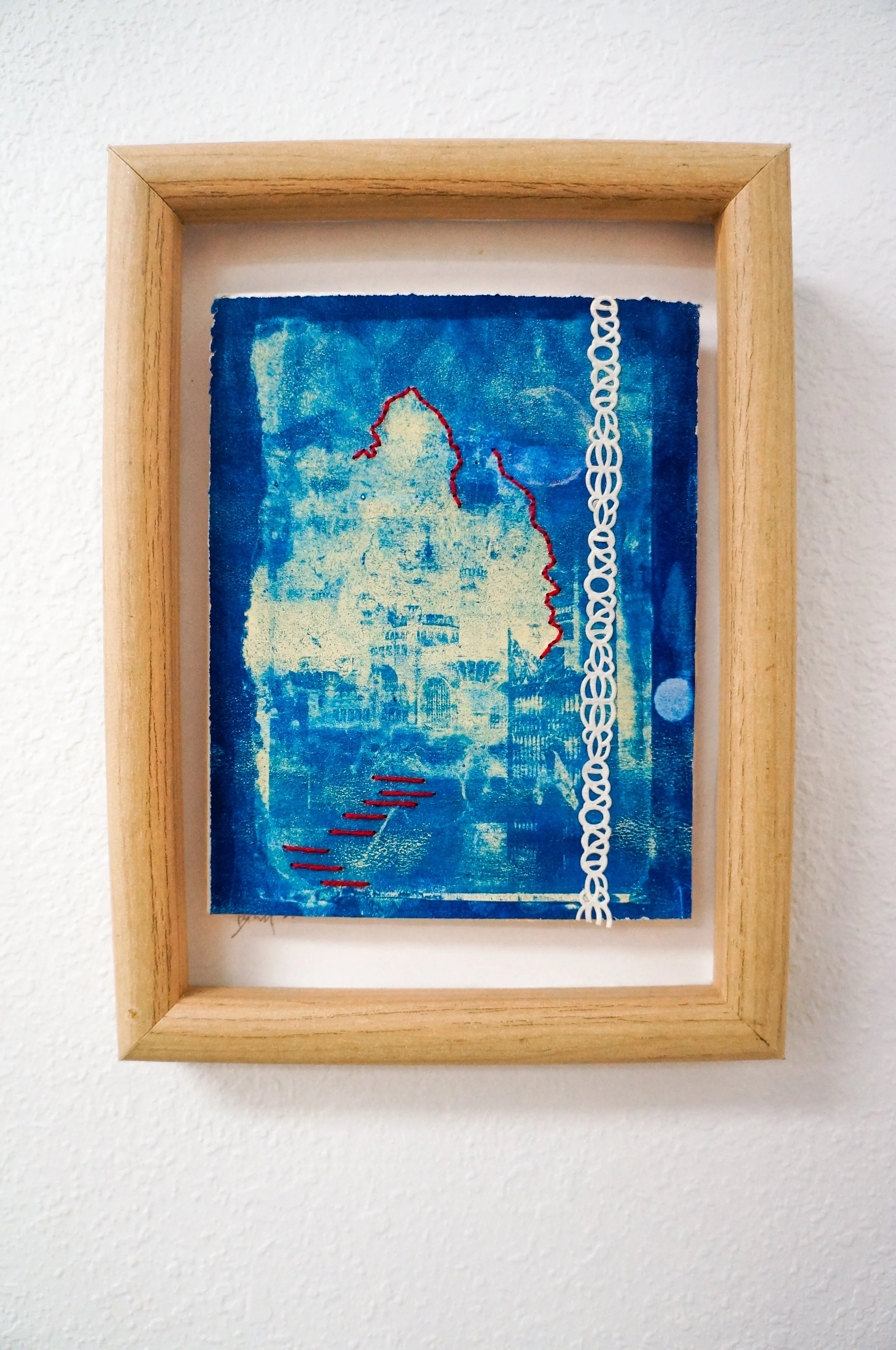
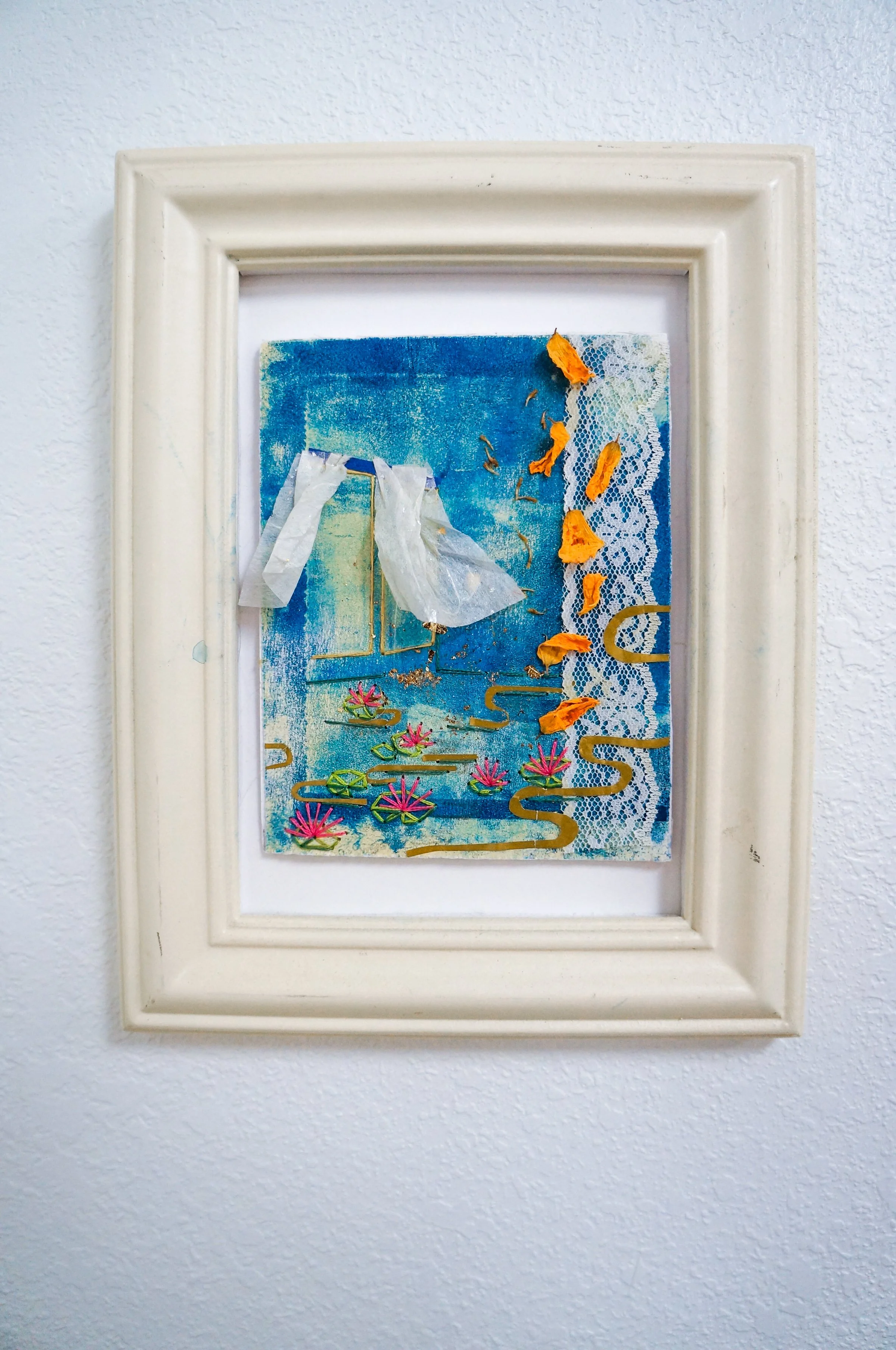
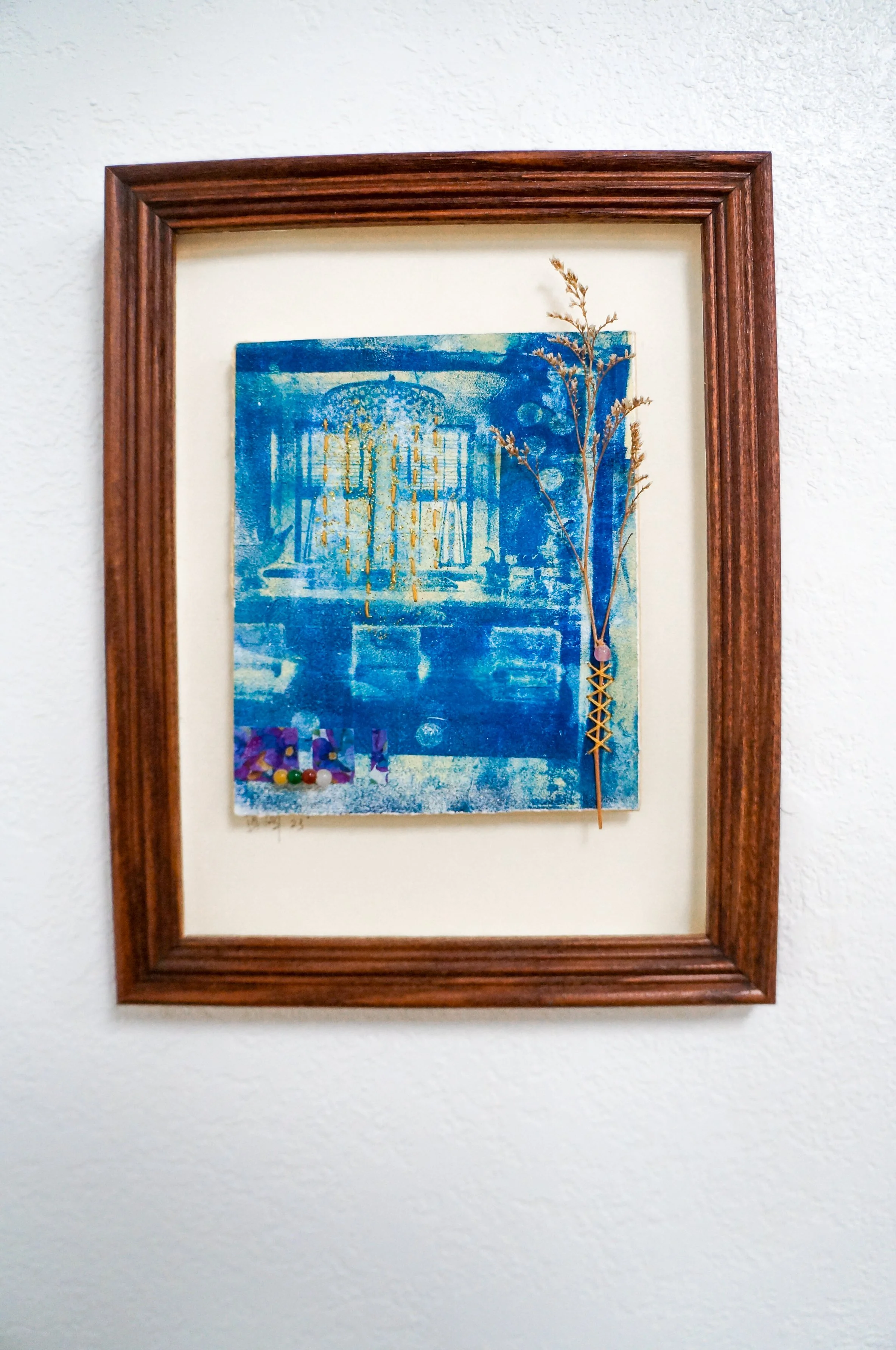
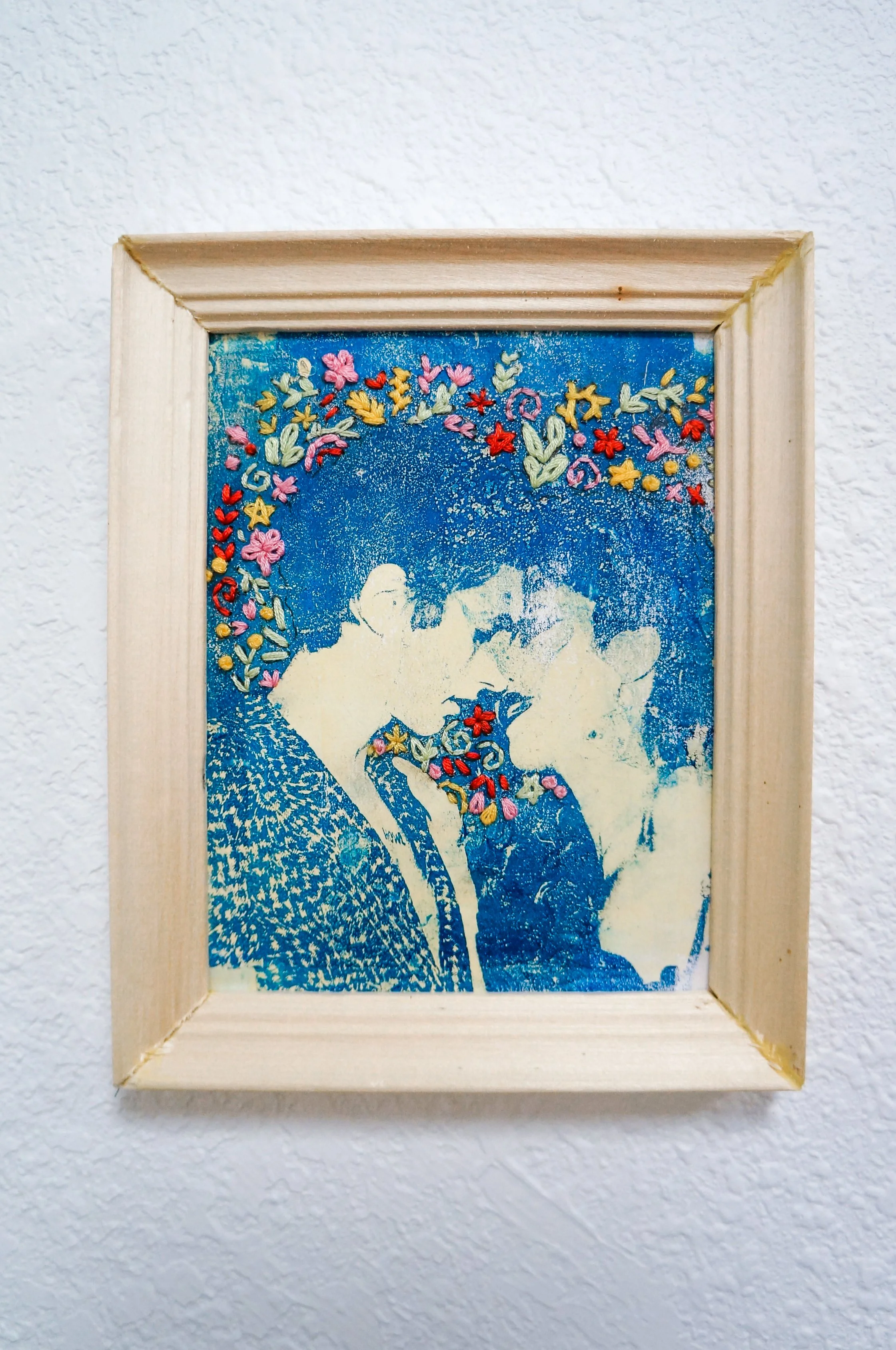
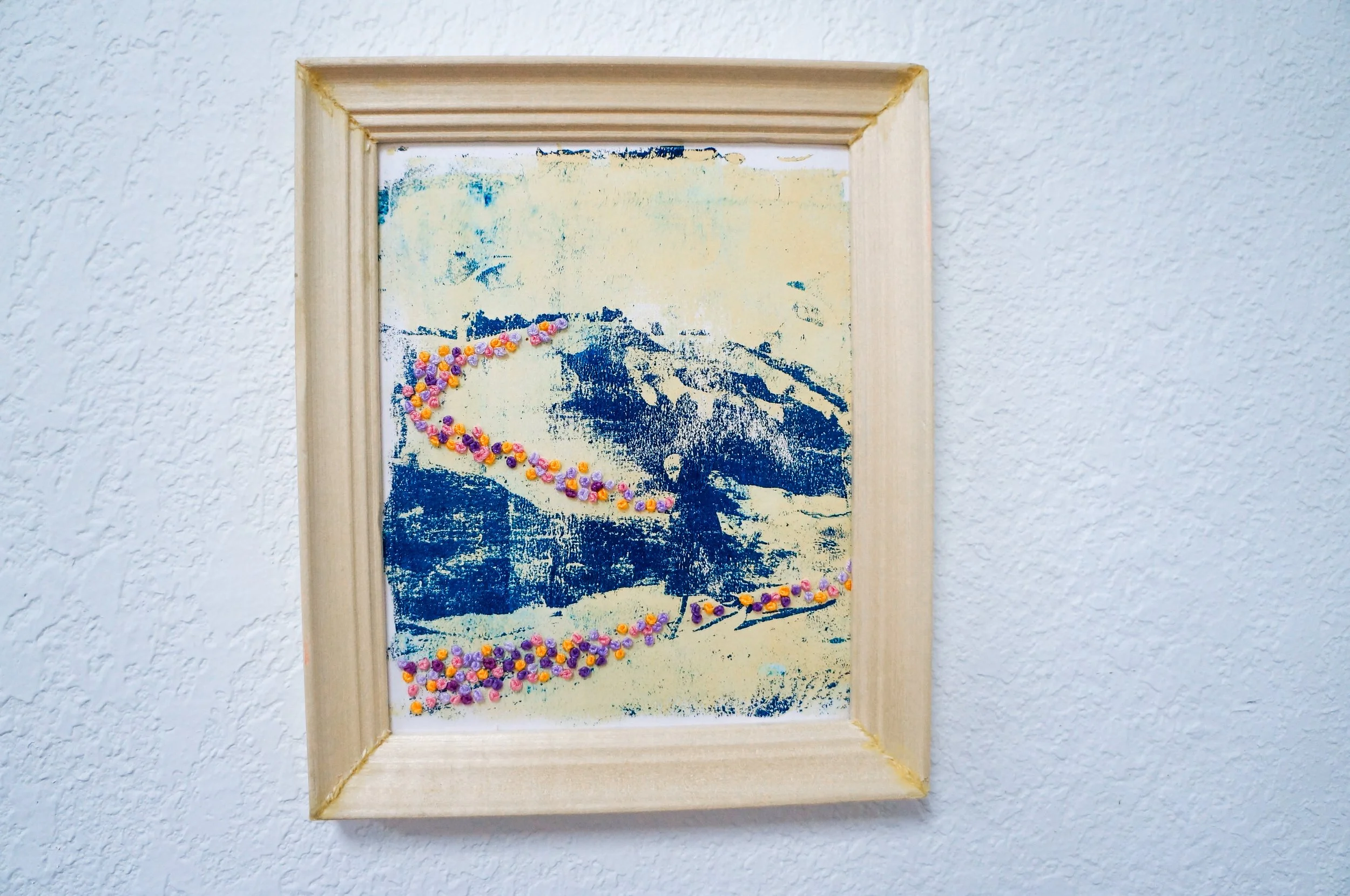
In “20 Shades of Blue,” multidisciplinary artist Xiao Faria daCunha constructs an interactive experience that engages all five senses, thus resonating with the sixth and opening the viewer’s mind’s eyes.
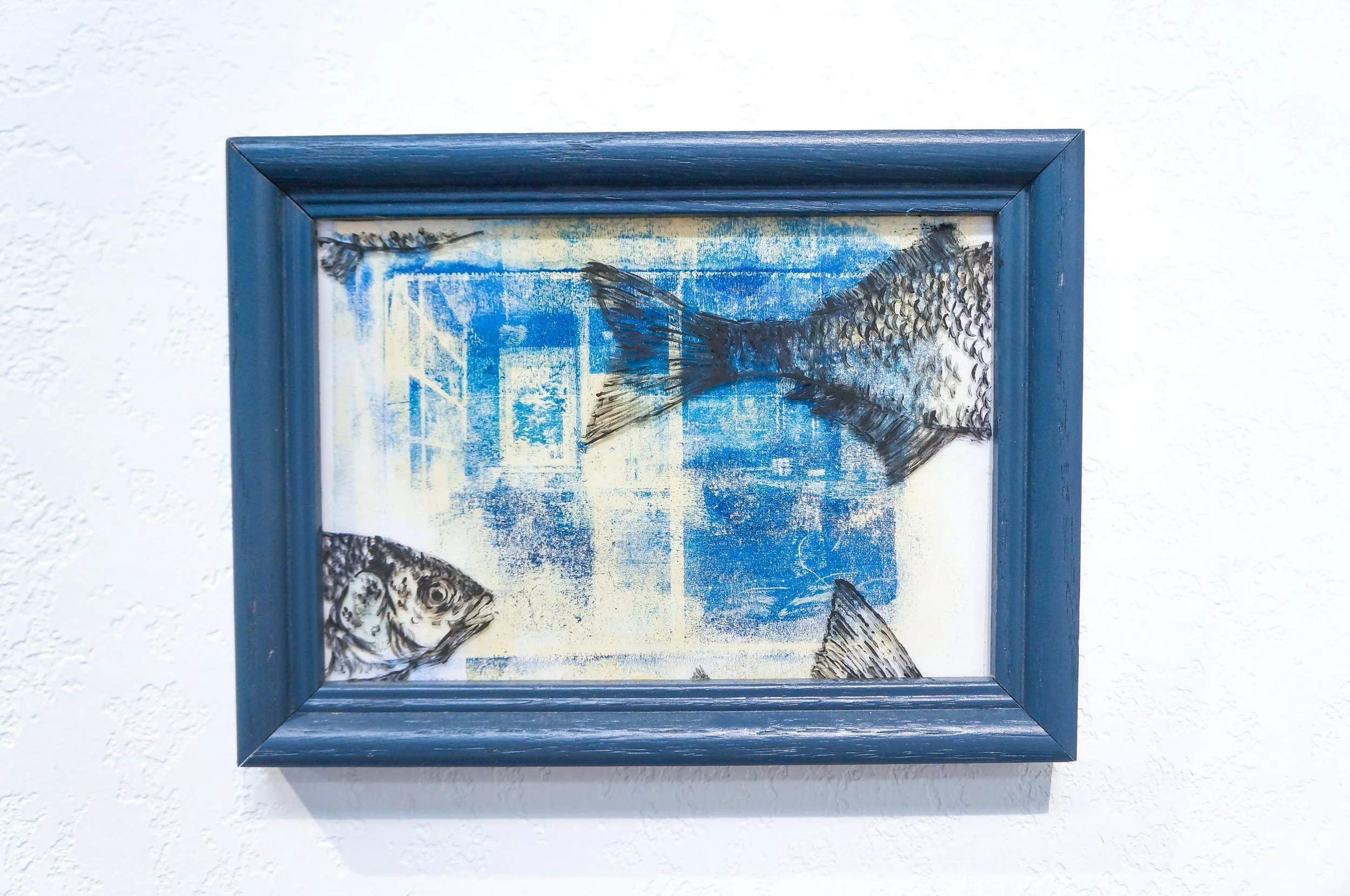
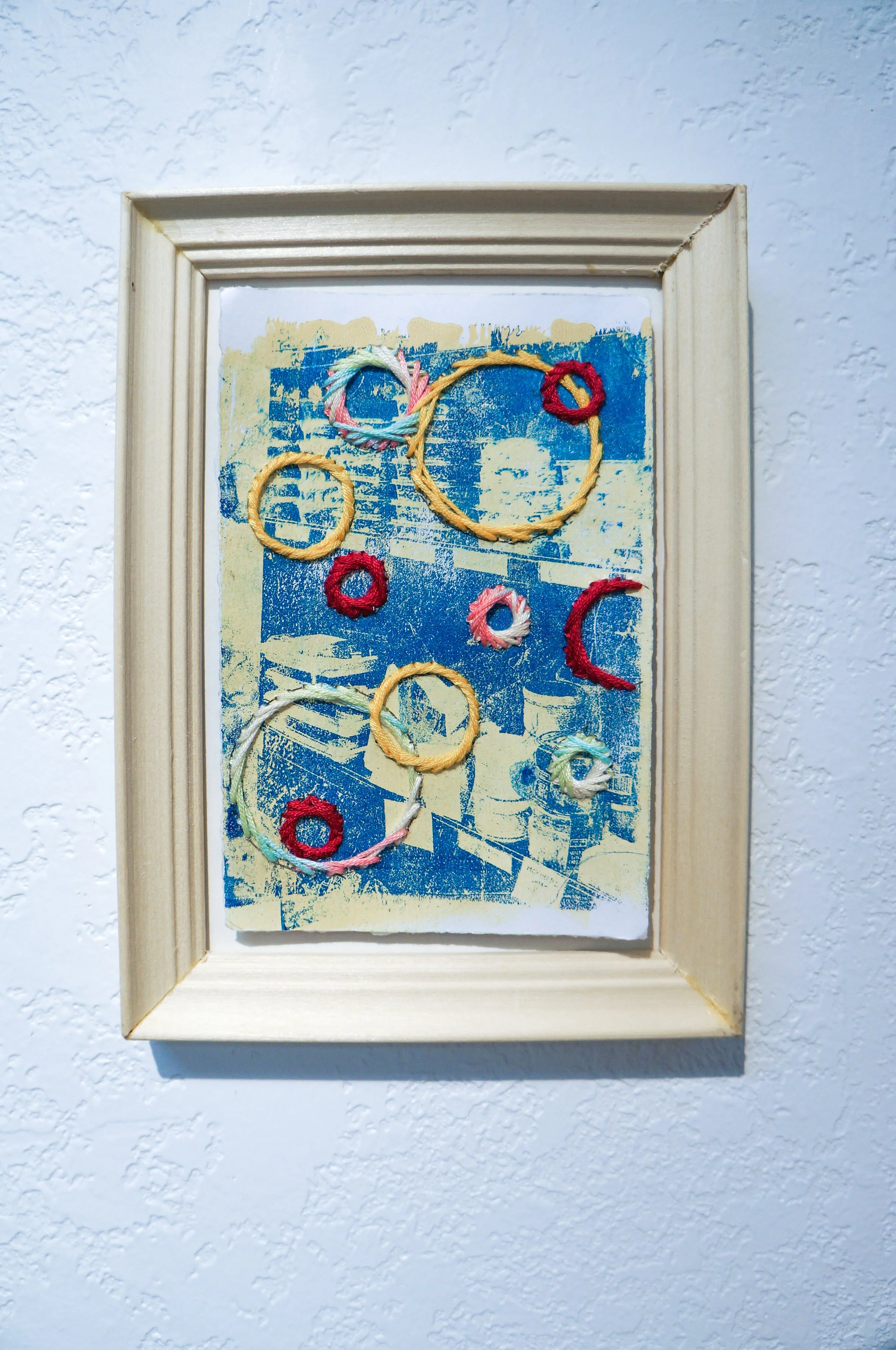
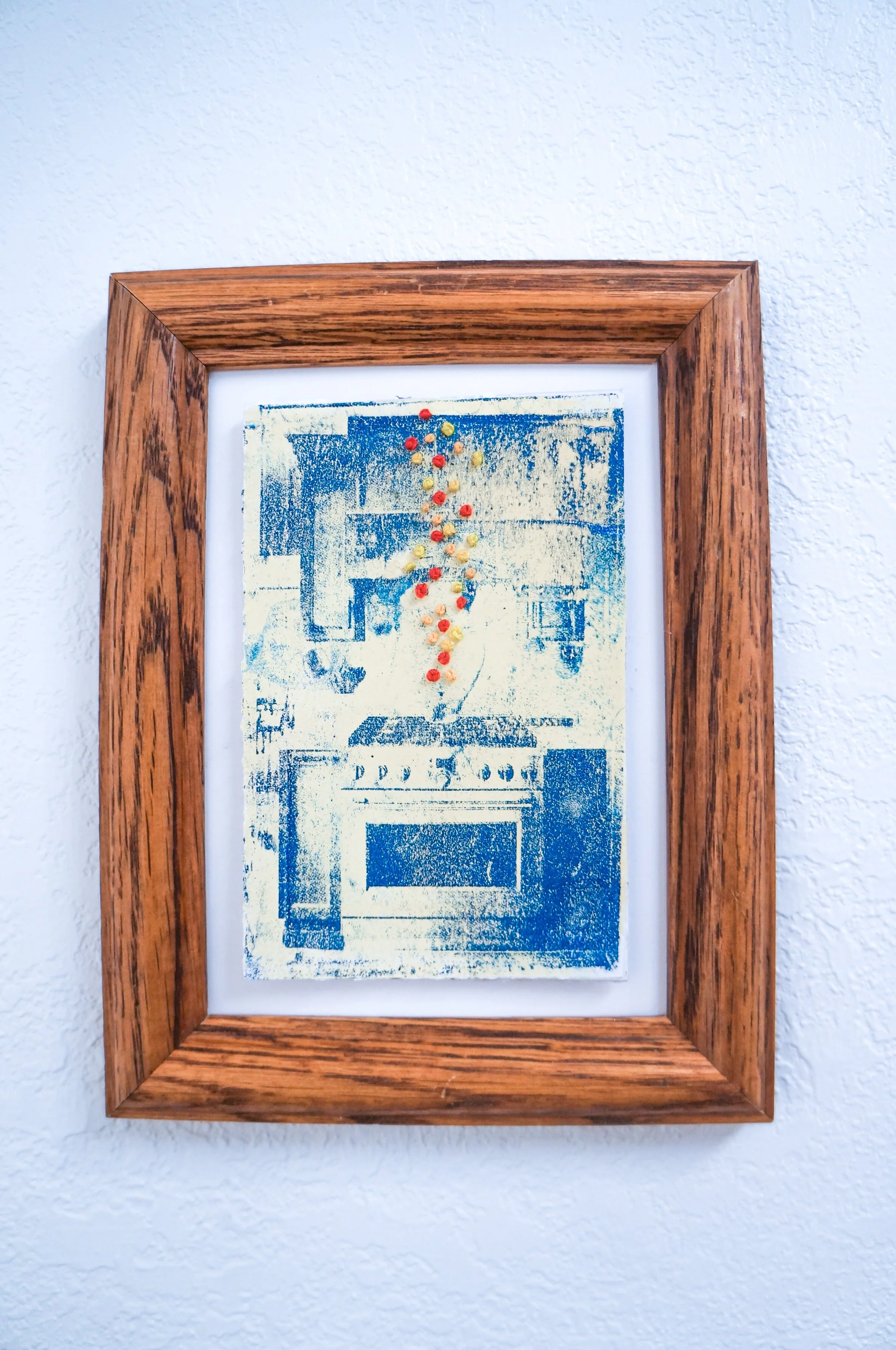
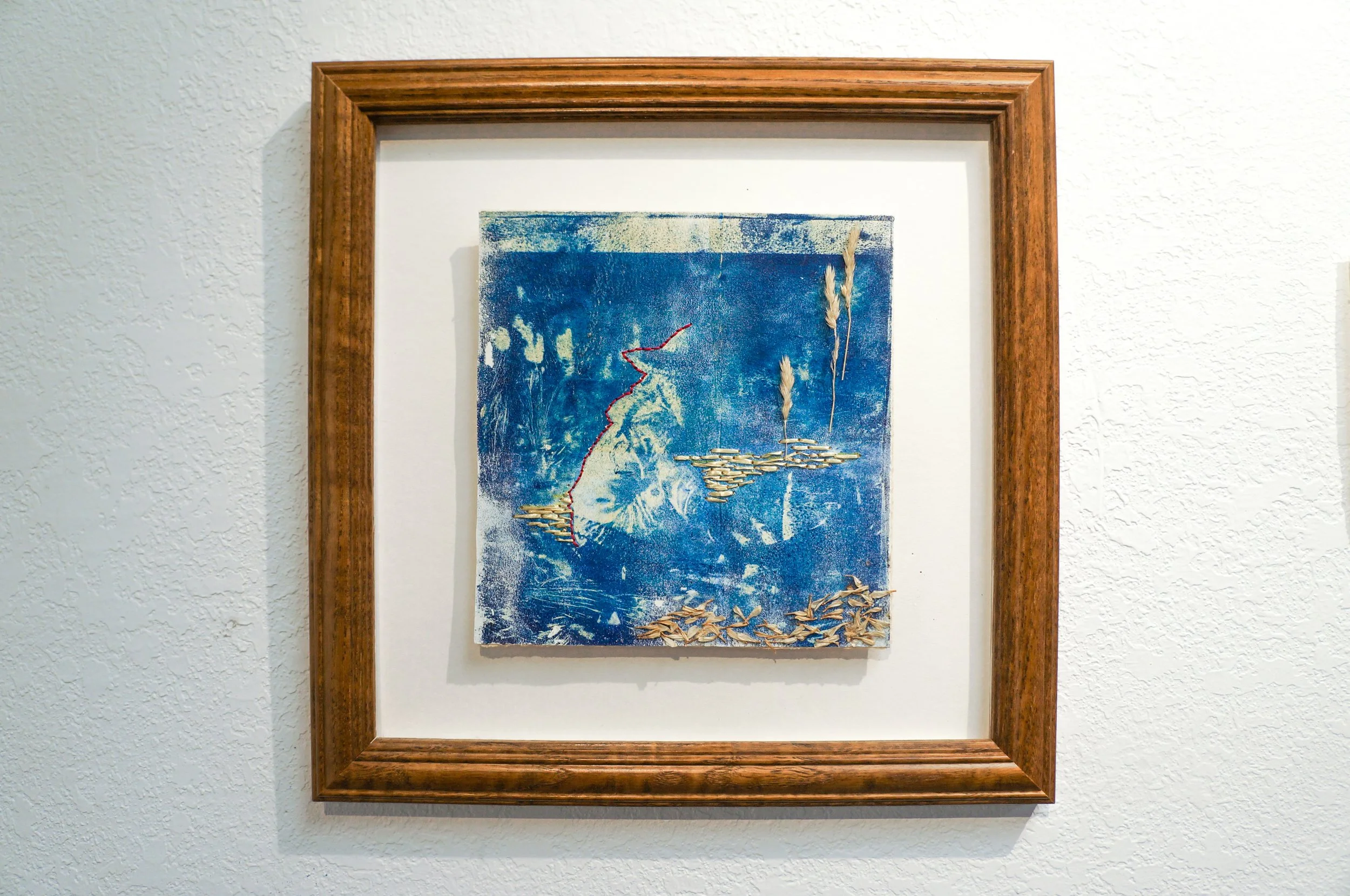
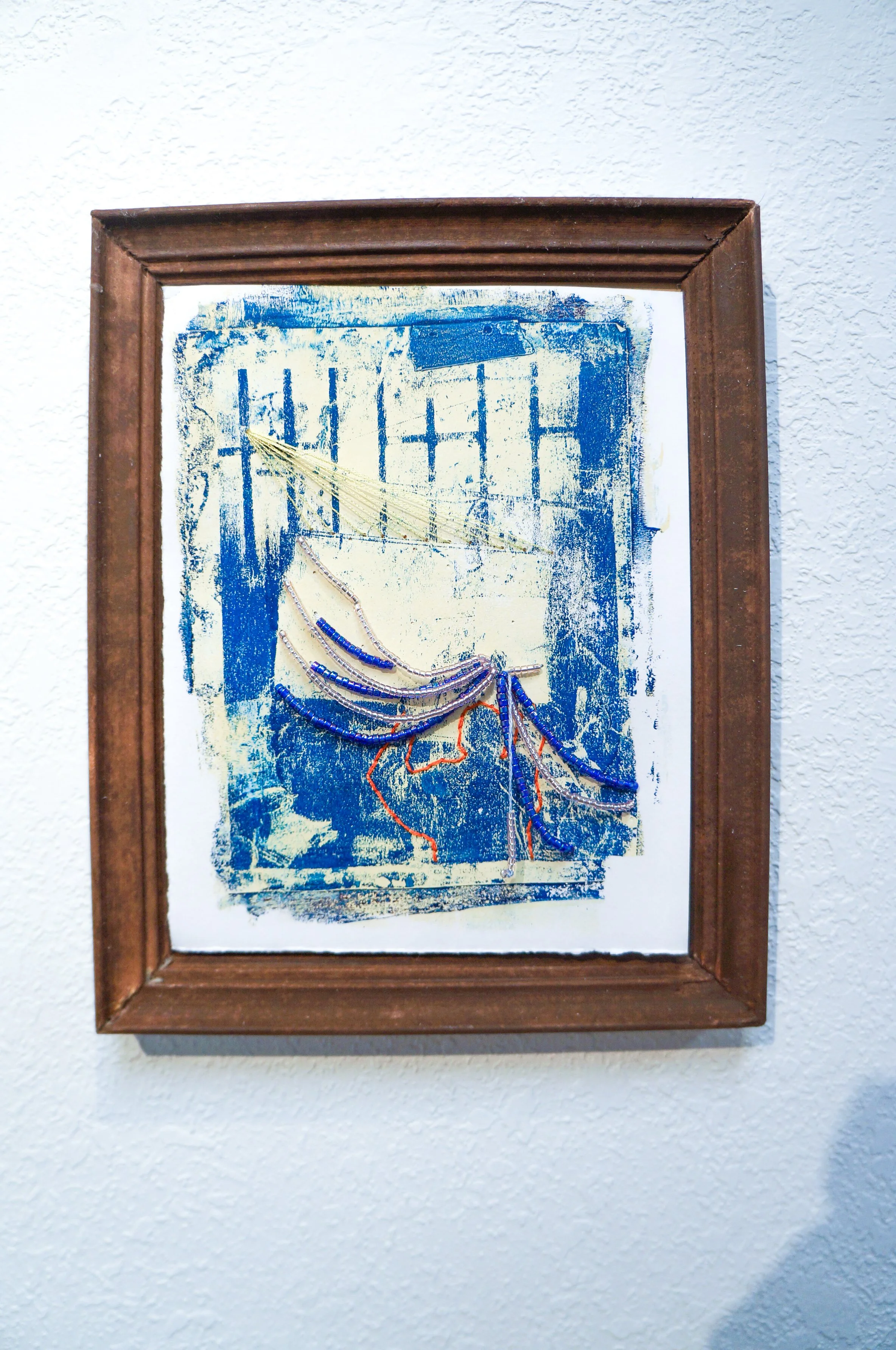
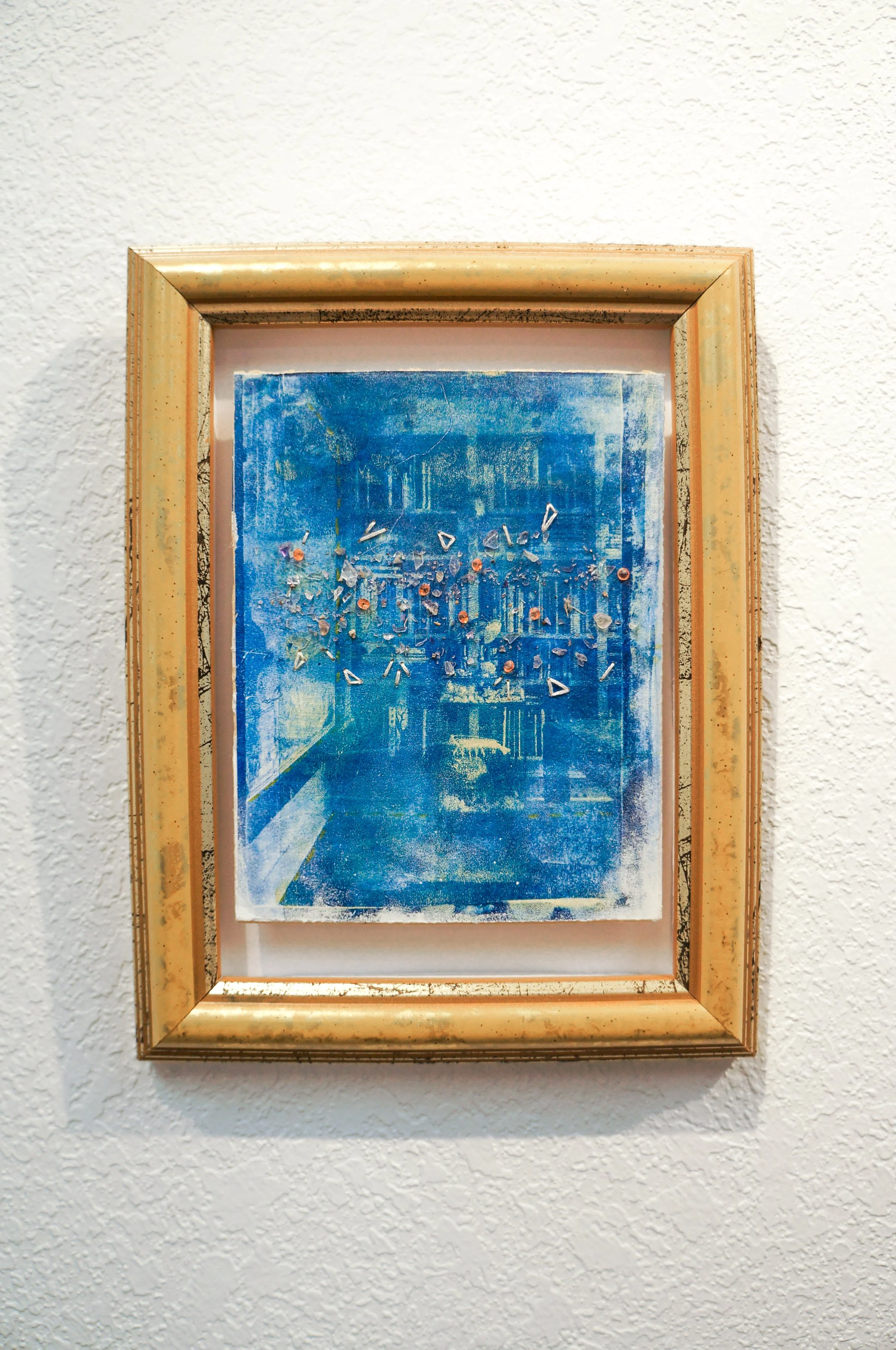
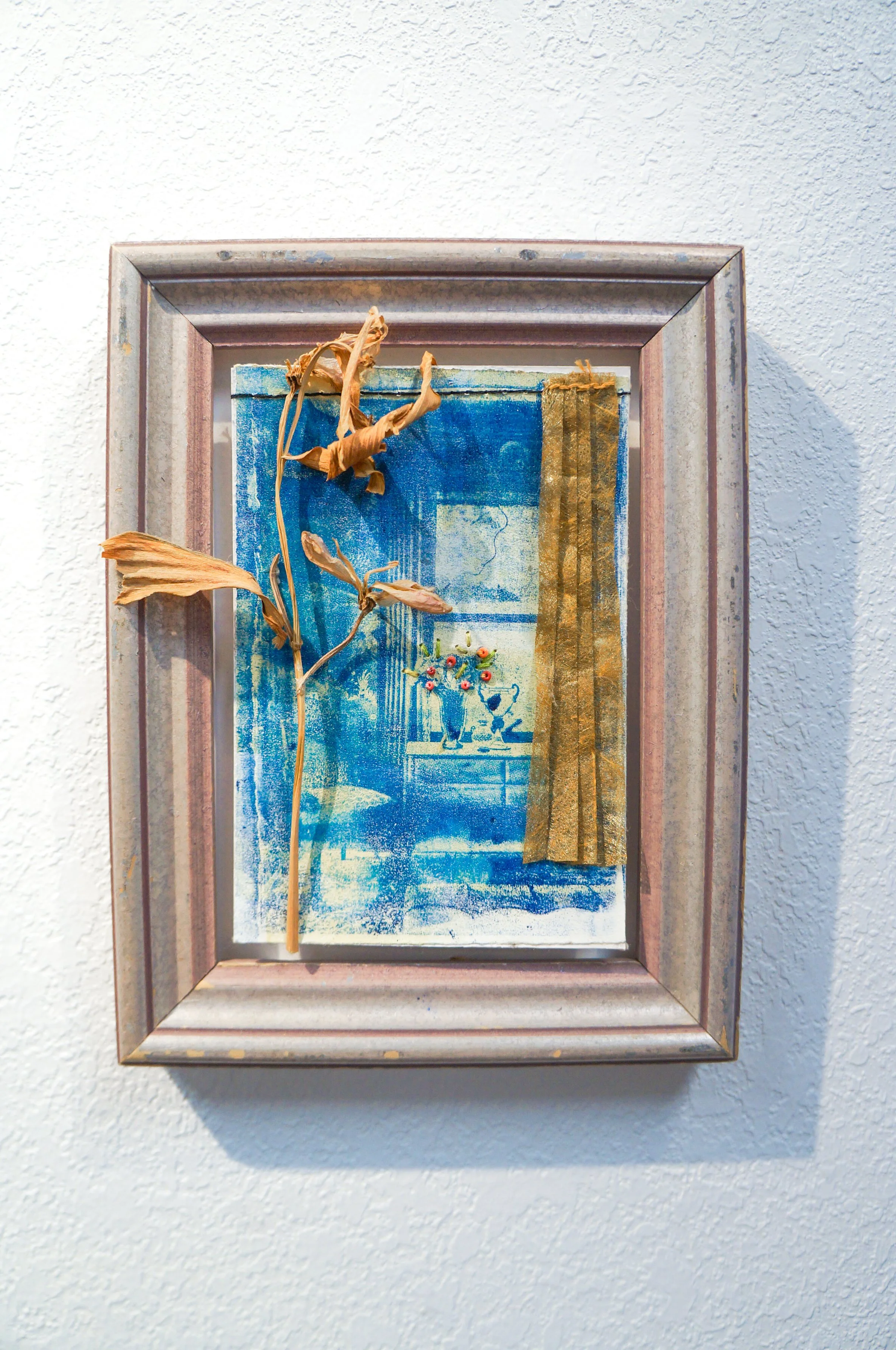
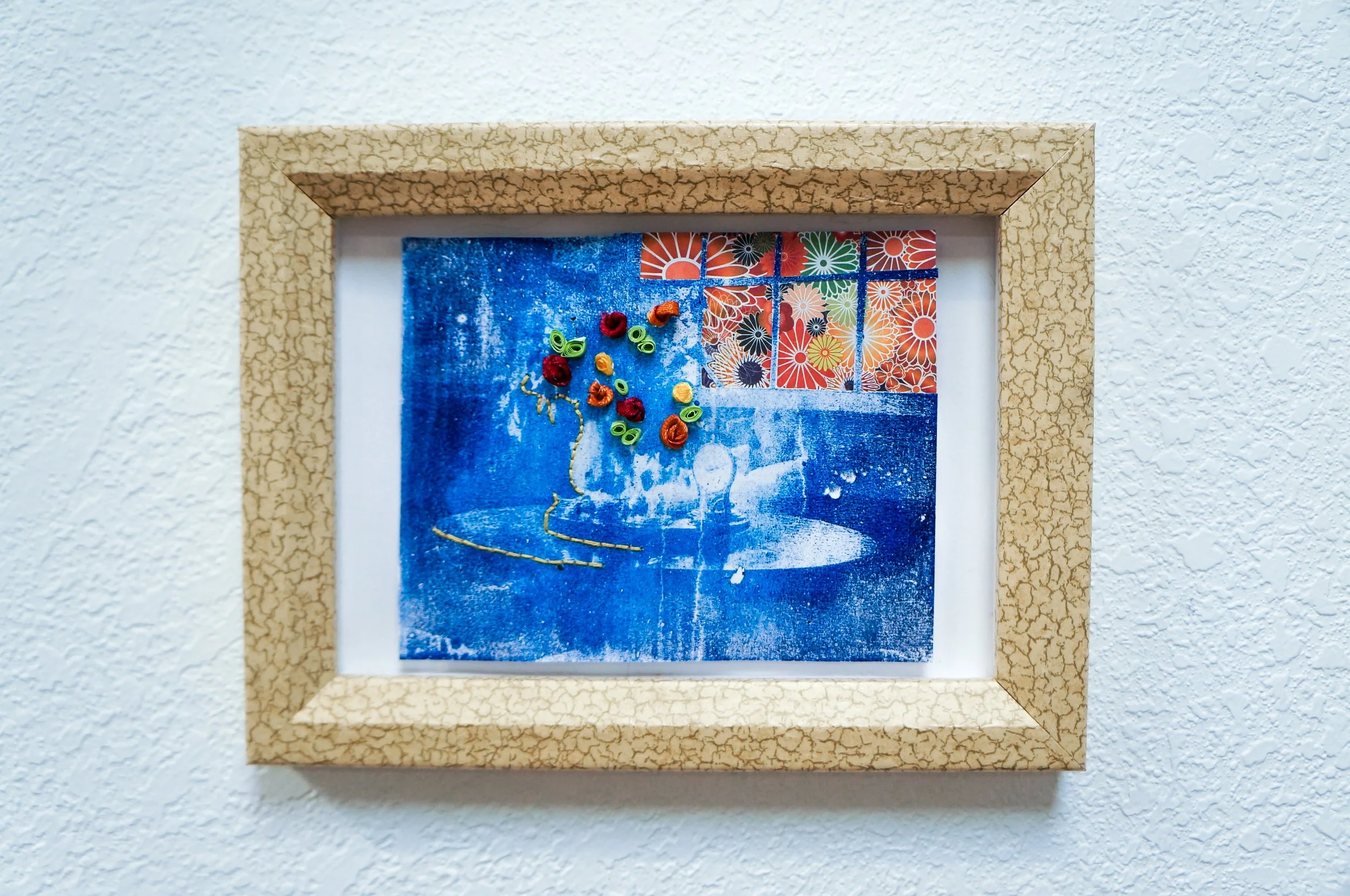
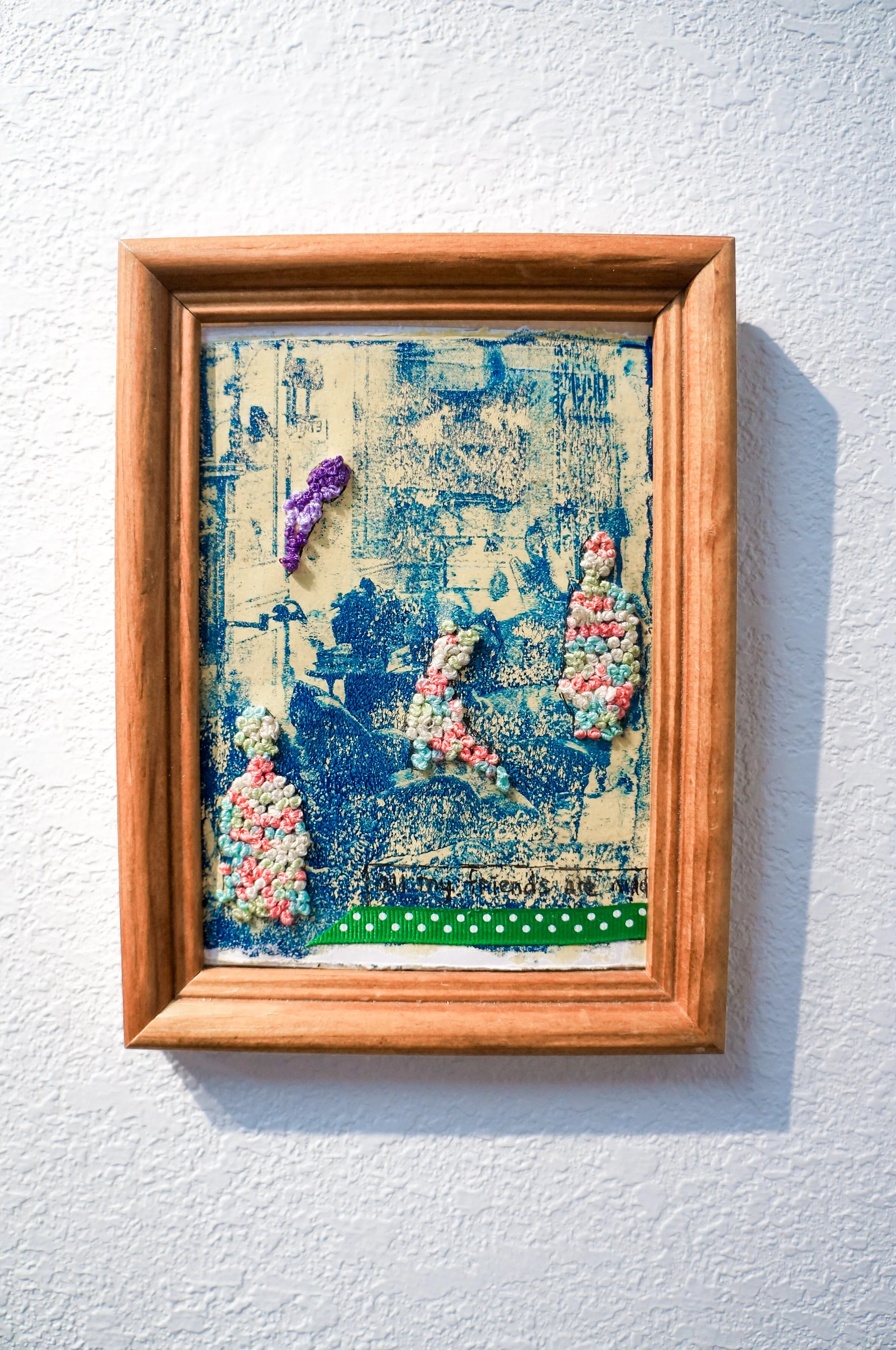
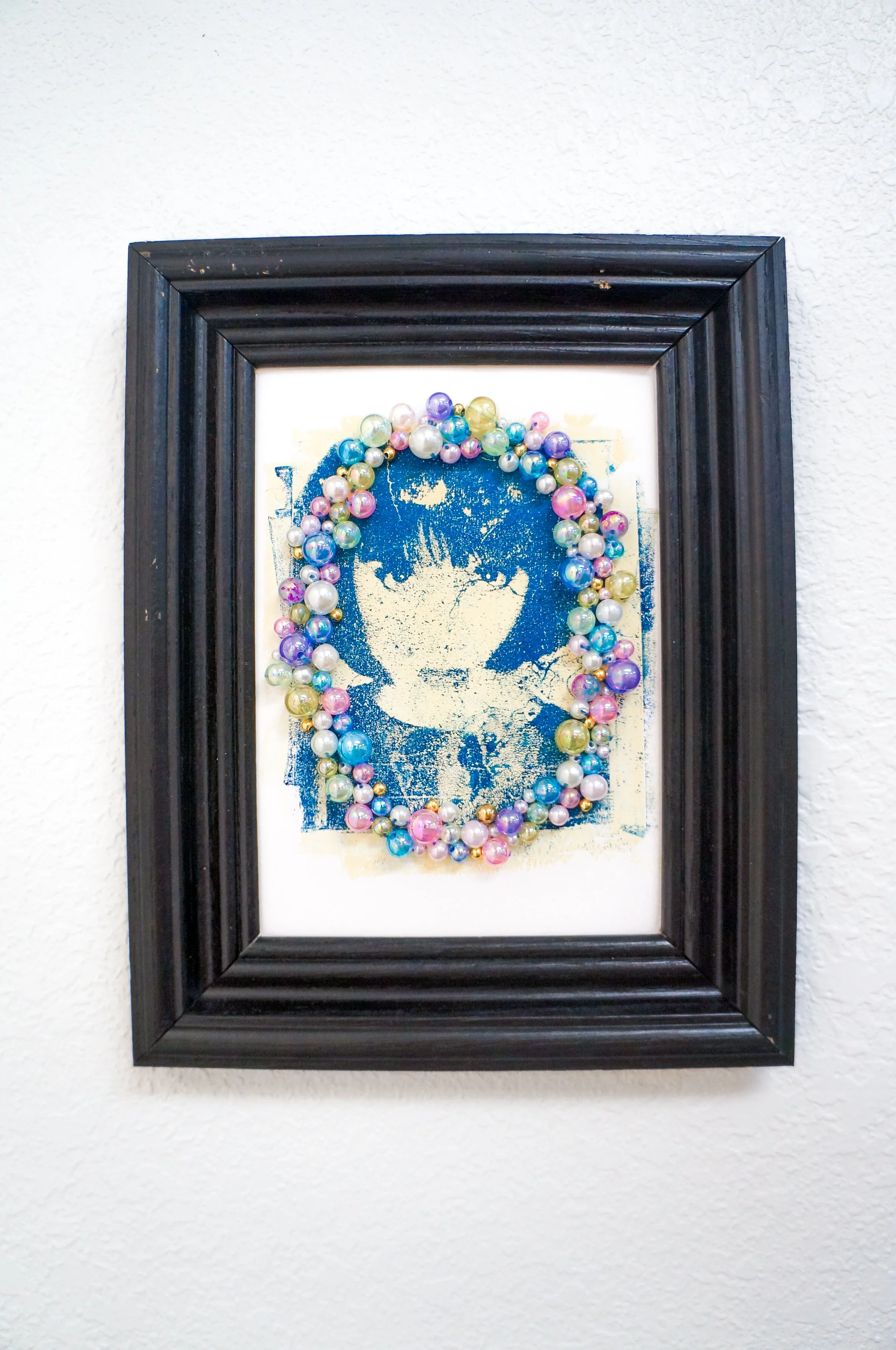
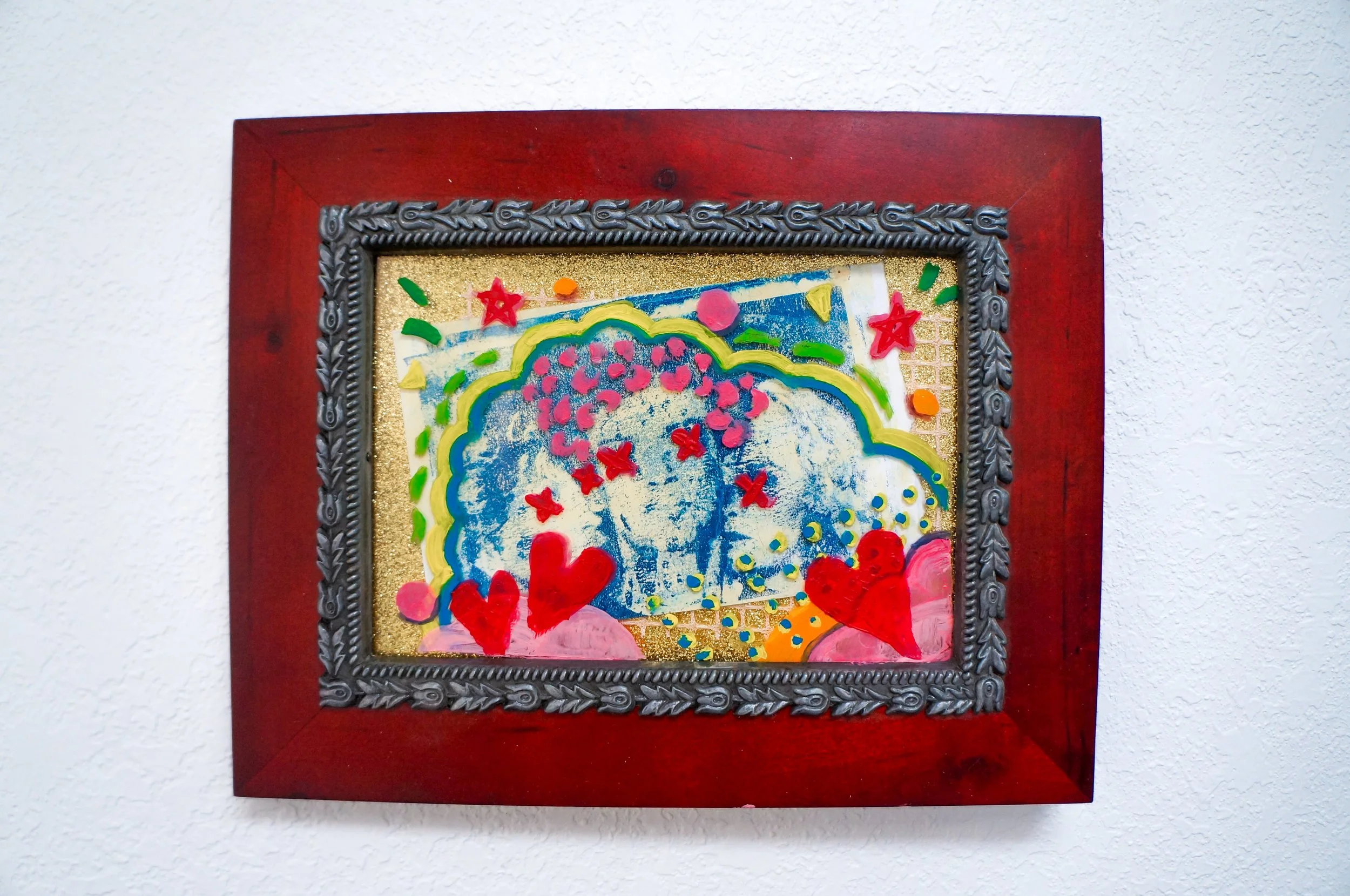
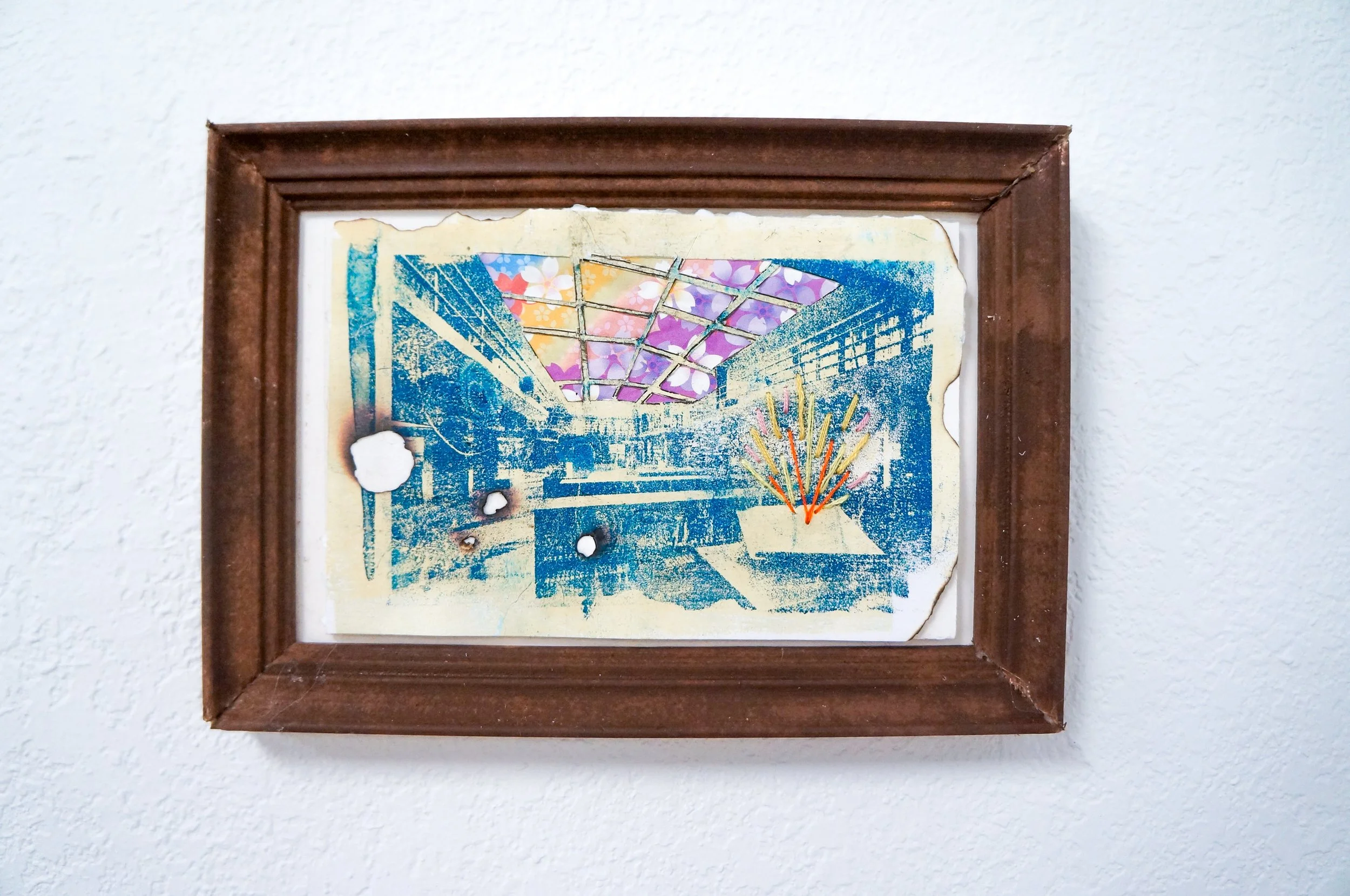
The images were makeshift memorials, gathered from old magazines lying around the artist’s home or donated by helpful friends for the project, serving as compensation for the artist’s lack of photo documentation of her life in Shanghai, China. Each image was an emotional anchor bridging the then and now, there and here: a mechanism many diasporas moving through the world without family ephemera had learned to employ as they nurture their identity and heritage on a different land.
Loss was inevitable in the transfer process. It was also inevitable as one extracts oneself from their homeland and inserts oneself into another, building a home away from home, while mourning the loss of what home could’ve been but never would become. However, with loss comes growth, with absence comes possibility. Through various methods of embellishment, the artist builds upon the transferred image, adding colors, textures, shapes, forms, and references, infusing the borrowed/inherited images with her personal touch.
“20 Shades of Blue” is an ode to the diasporic experience being one of endless grief and hope, unlearning and relearning, deconstruction and reconstruction.
Instruction
In this exhibition, you’re encouraged to engage with all the interactive components. At each “segment” of the show, you will find a QR code on the wall. Scanning the QR code will take you to an audio recording of the artist reading an essay. As you listen to the reading, you can move through the corresponding section of the artwork, which is framed so the audience can gently touch and feel the texture of each piece. When you reach the next section, scan the new QR code to switch to the next reading audio.
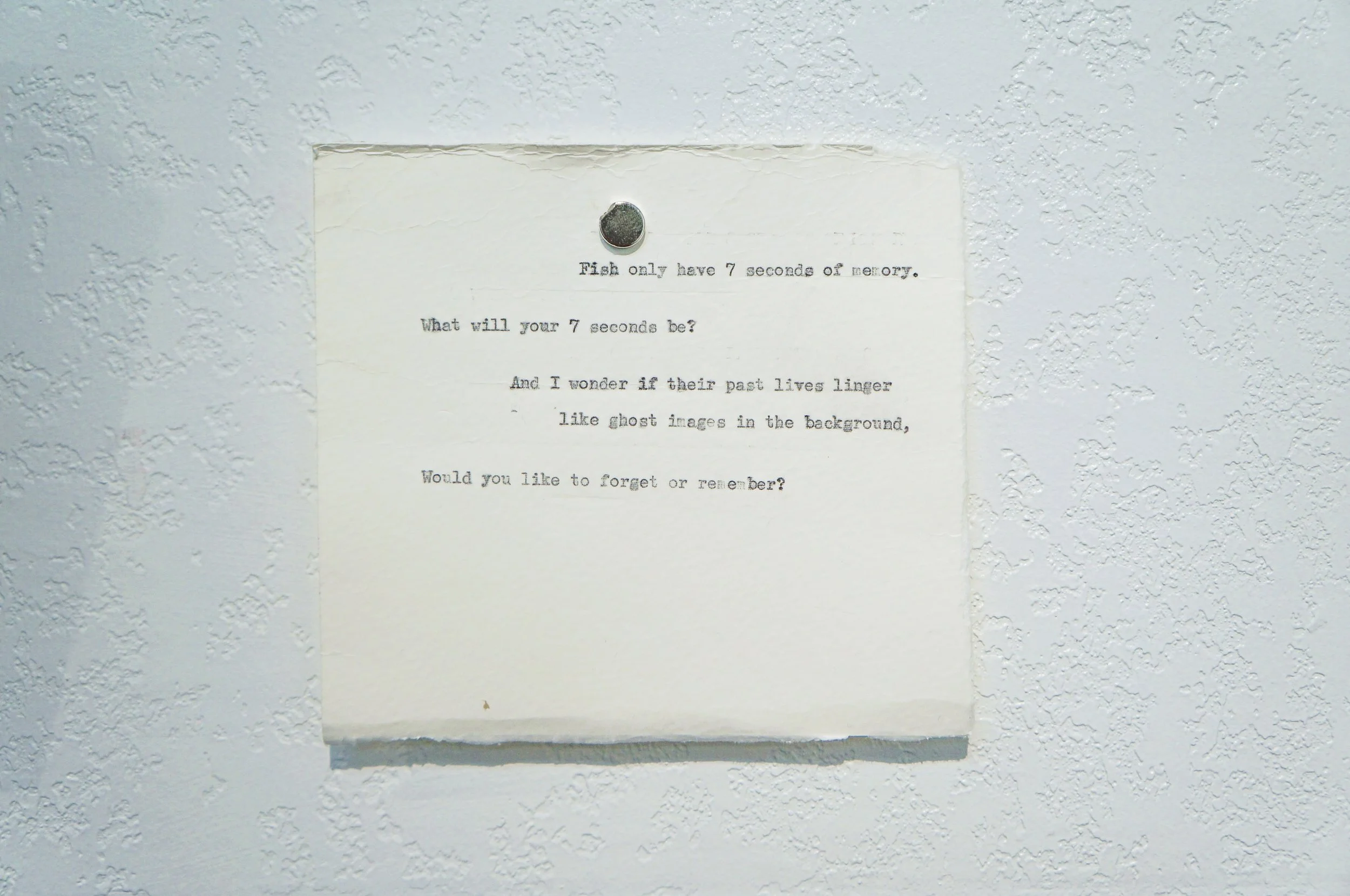
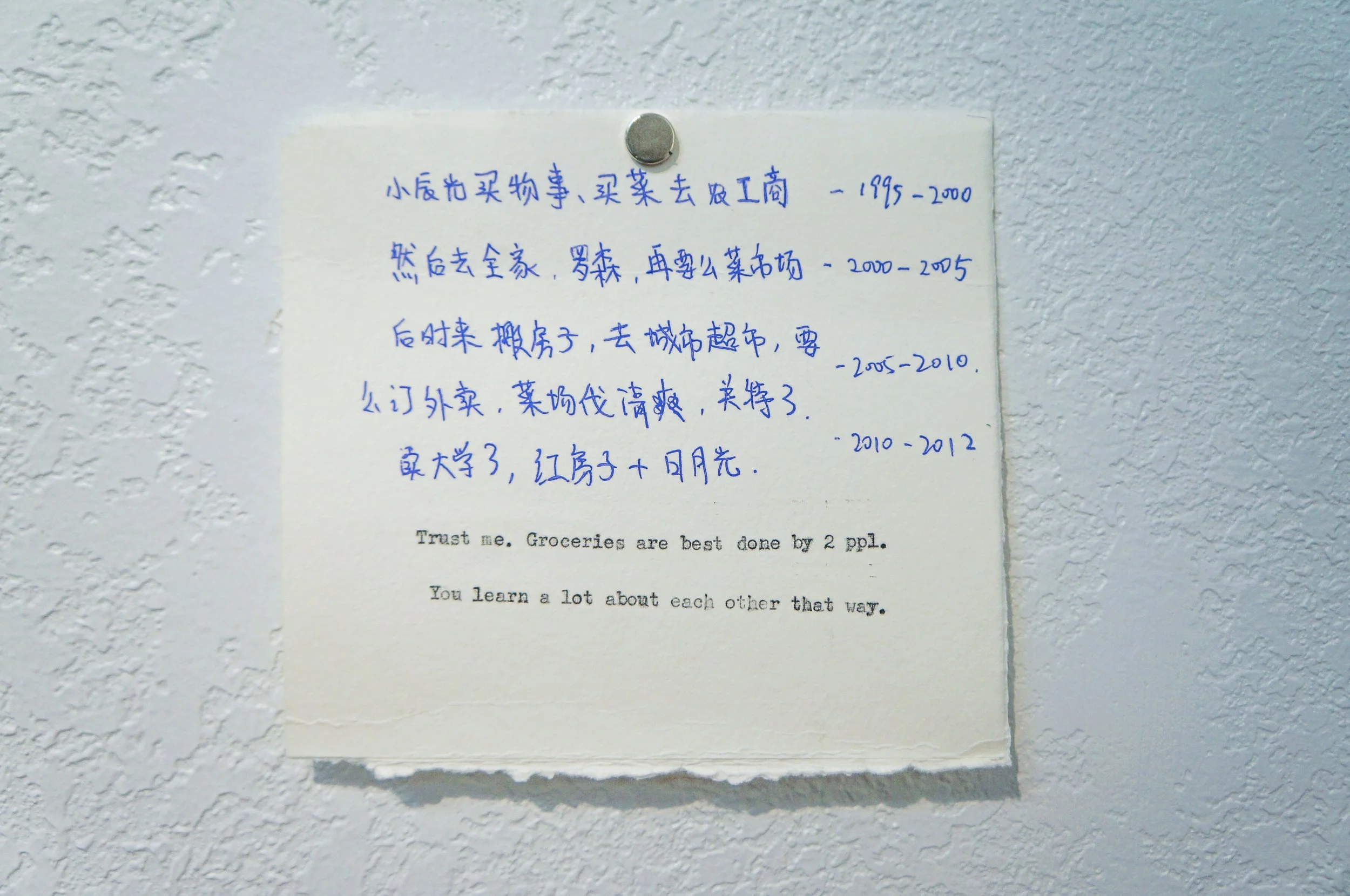
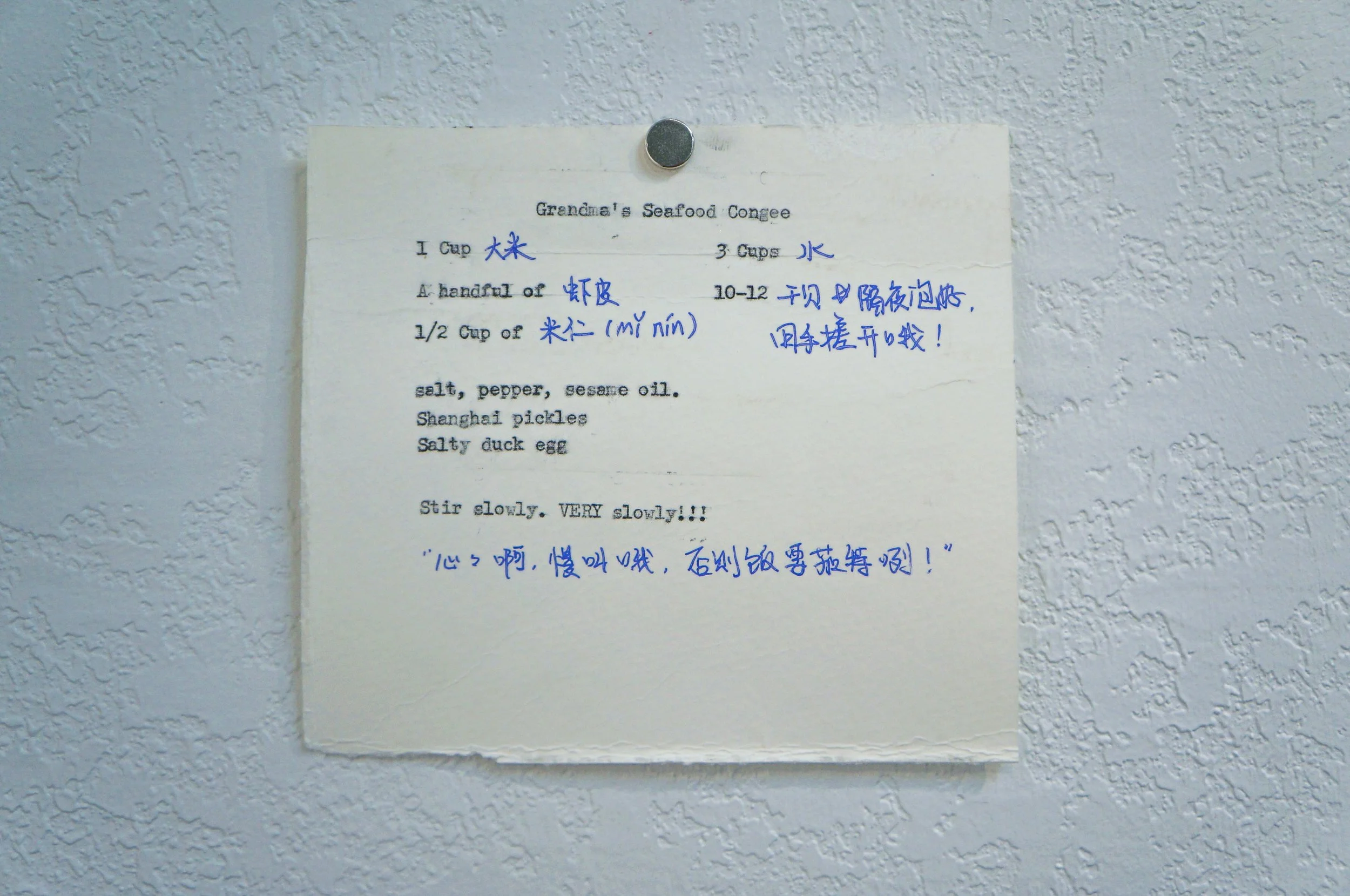
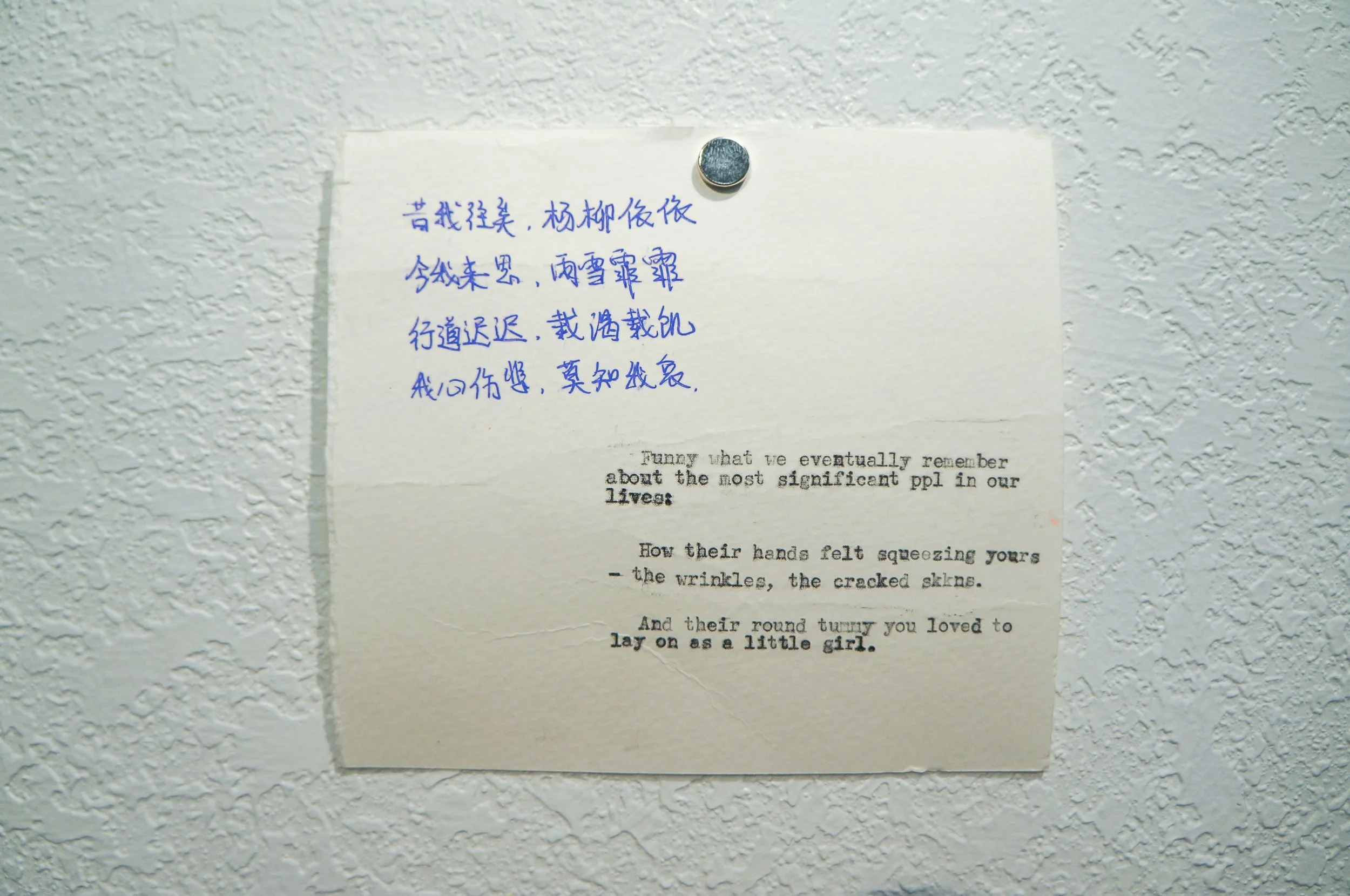
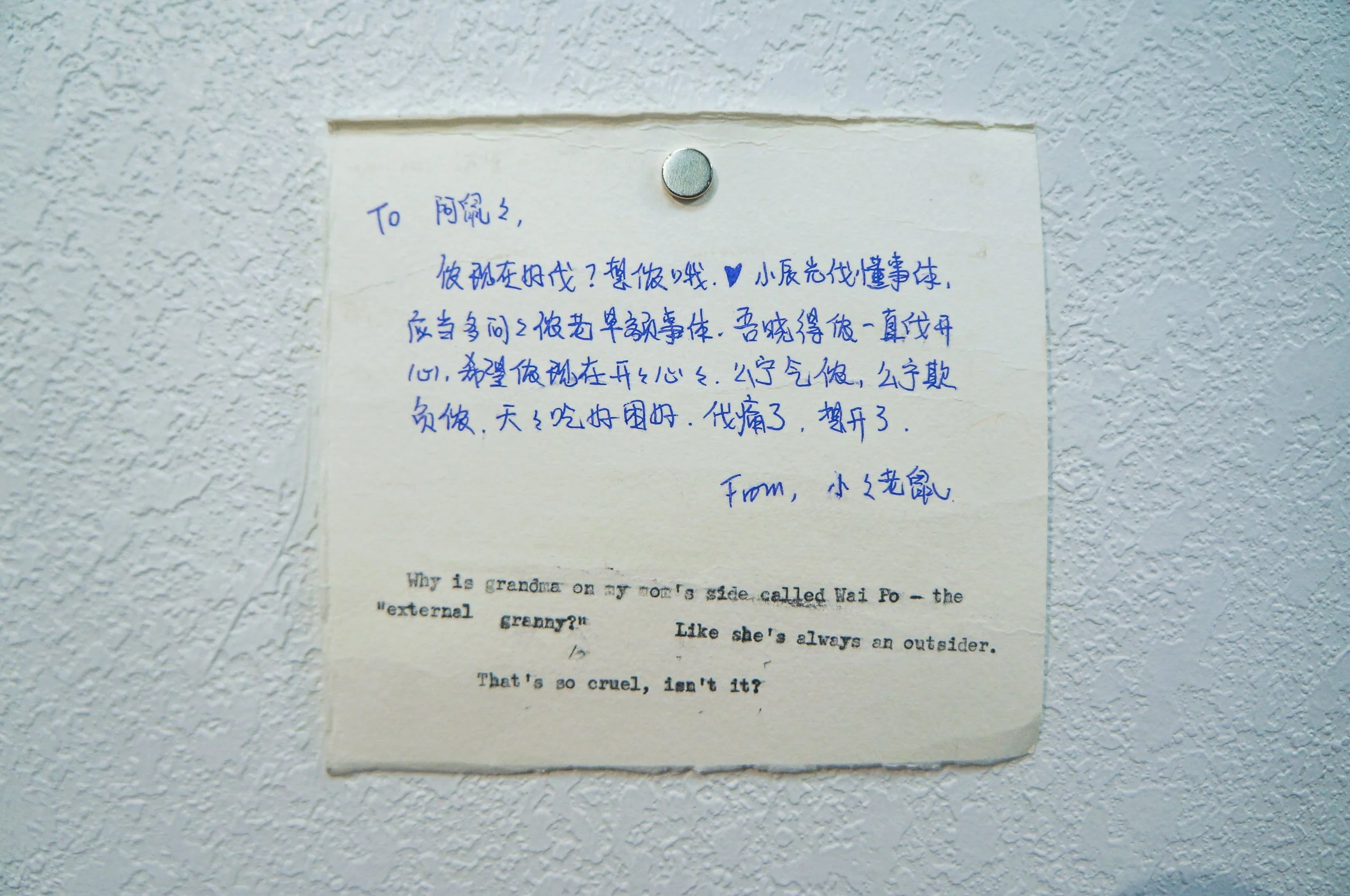
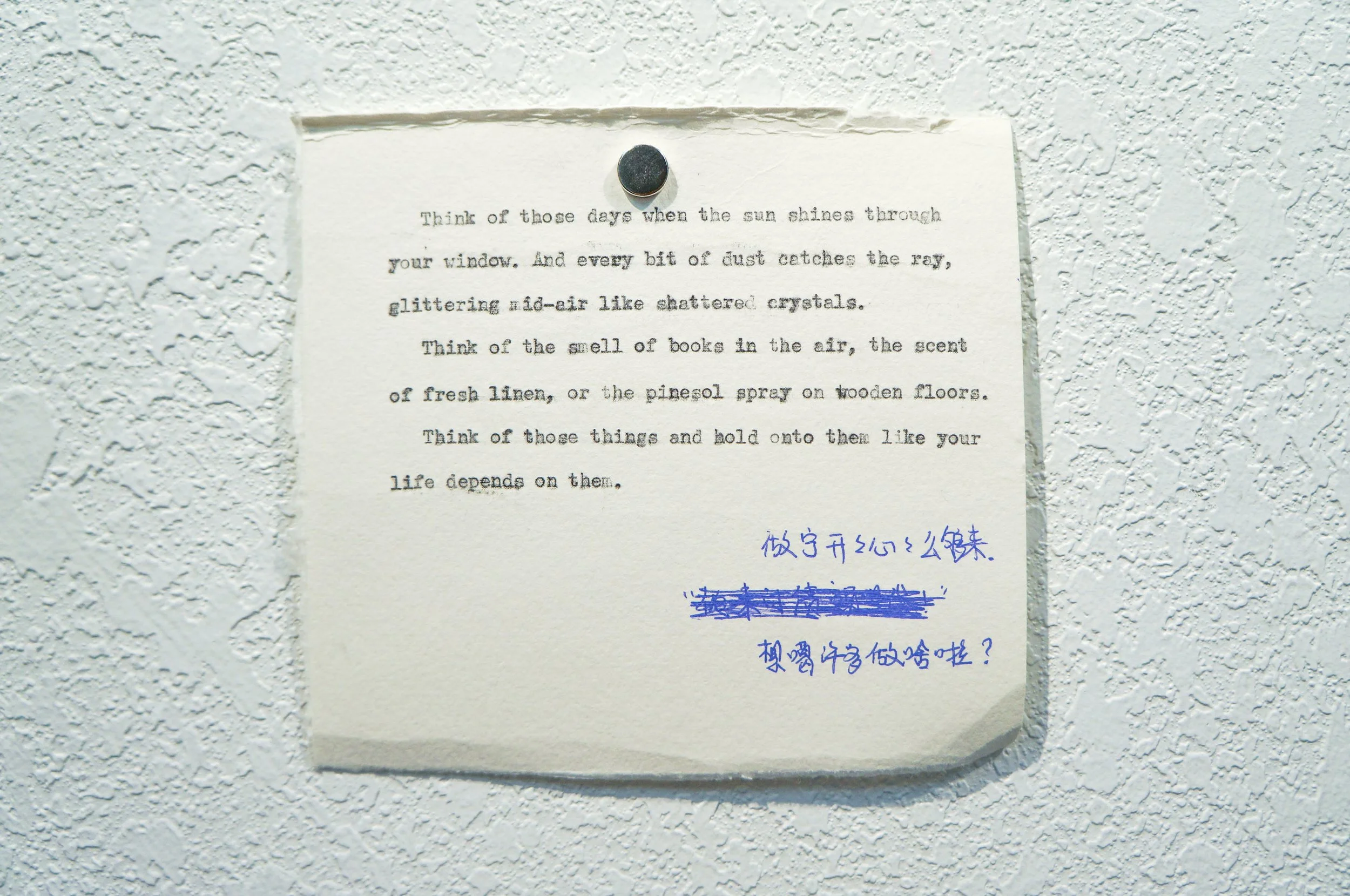
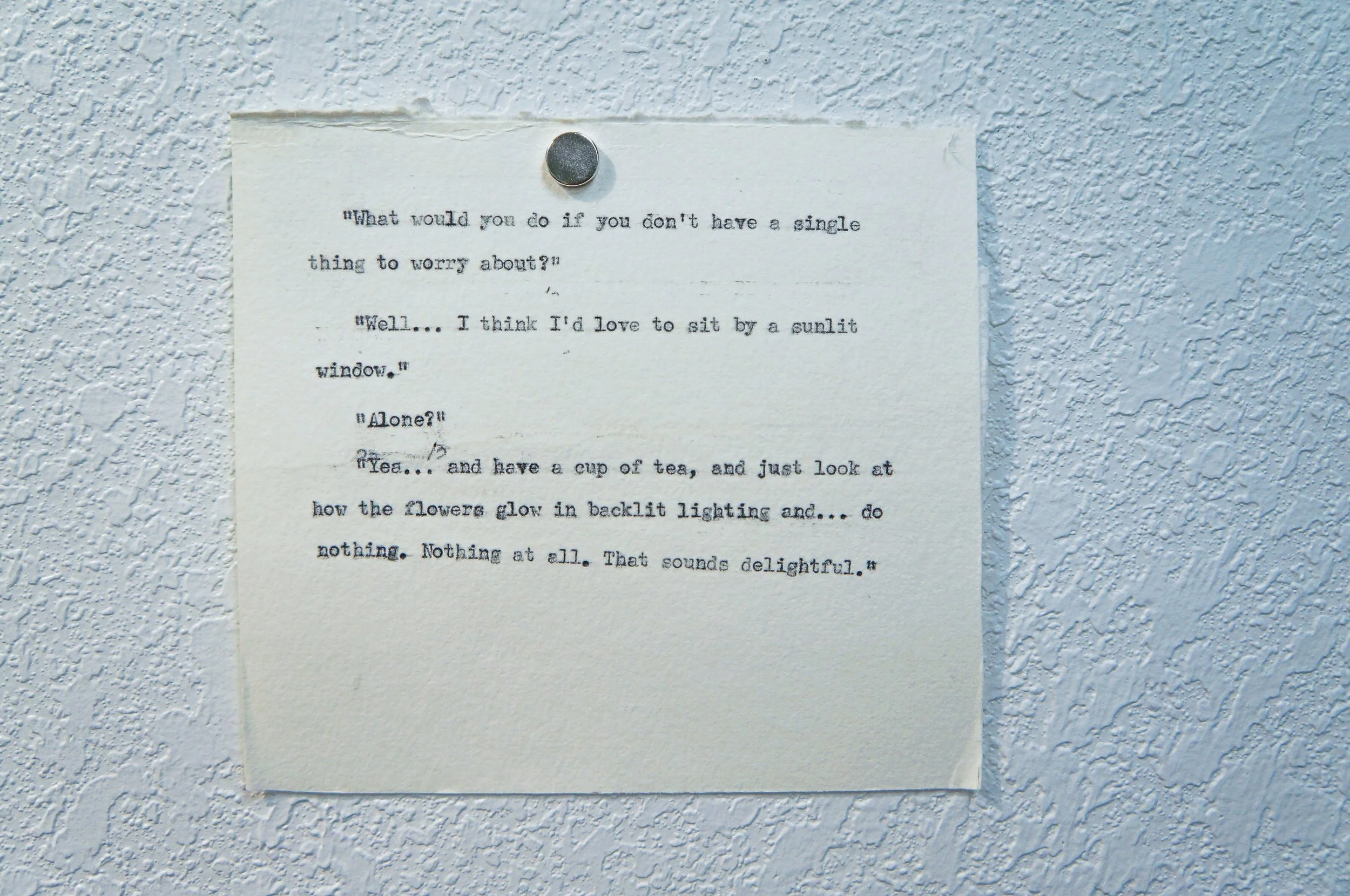
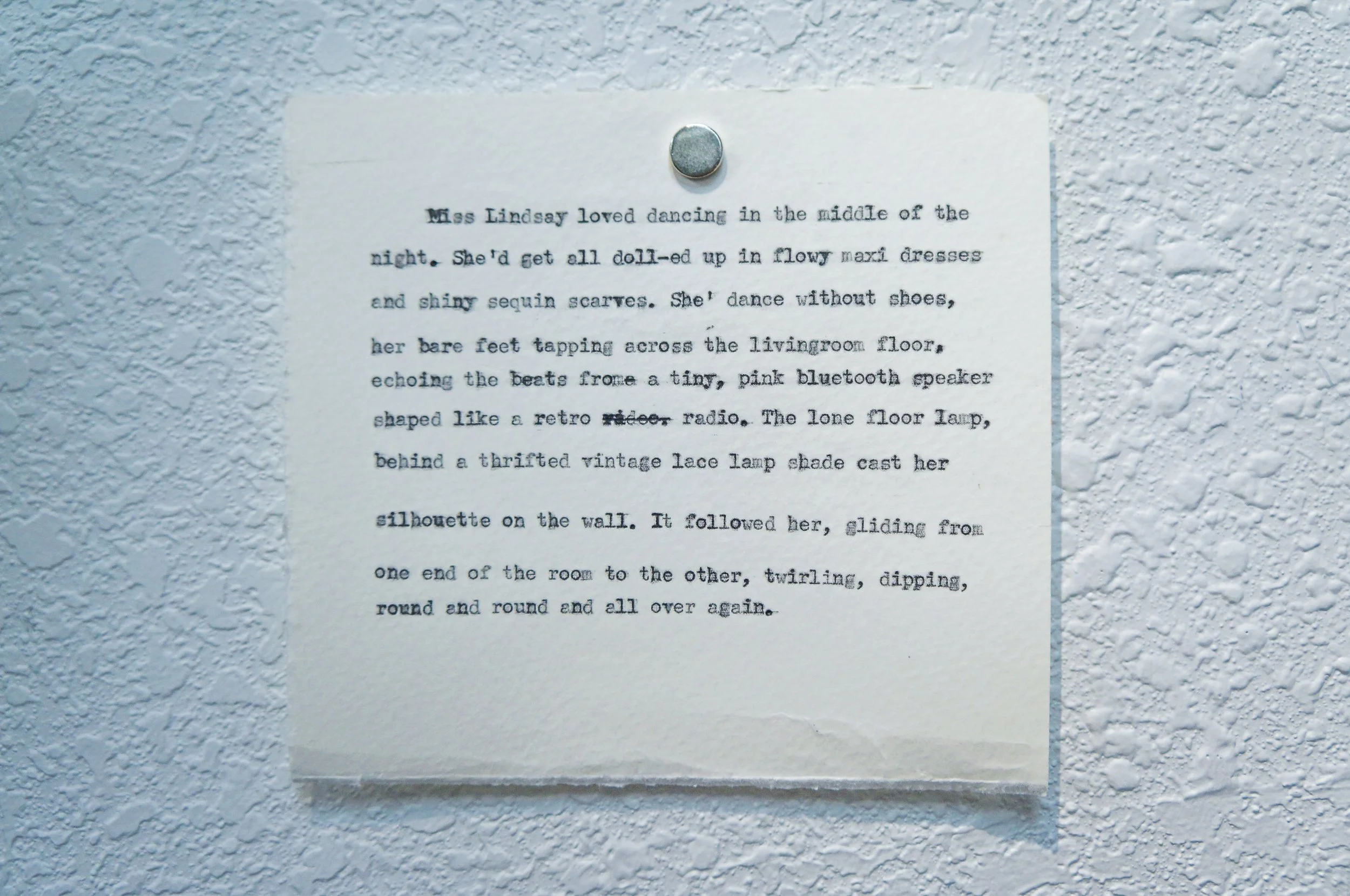
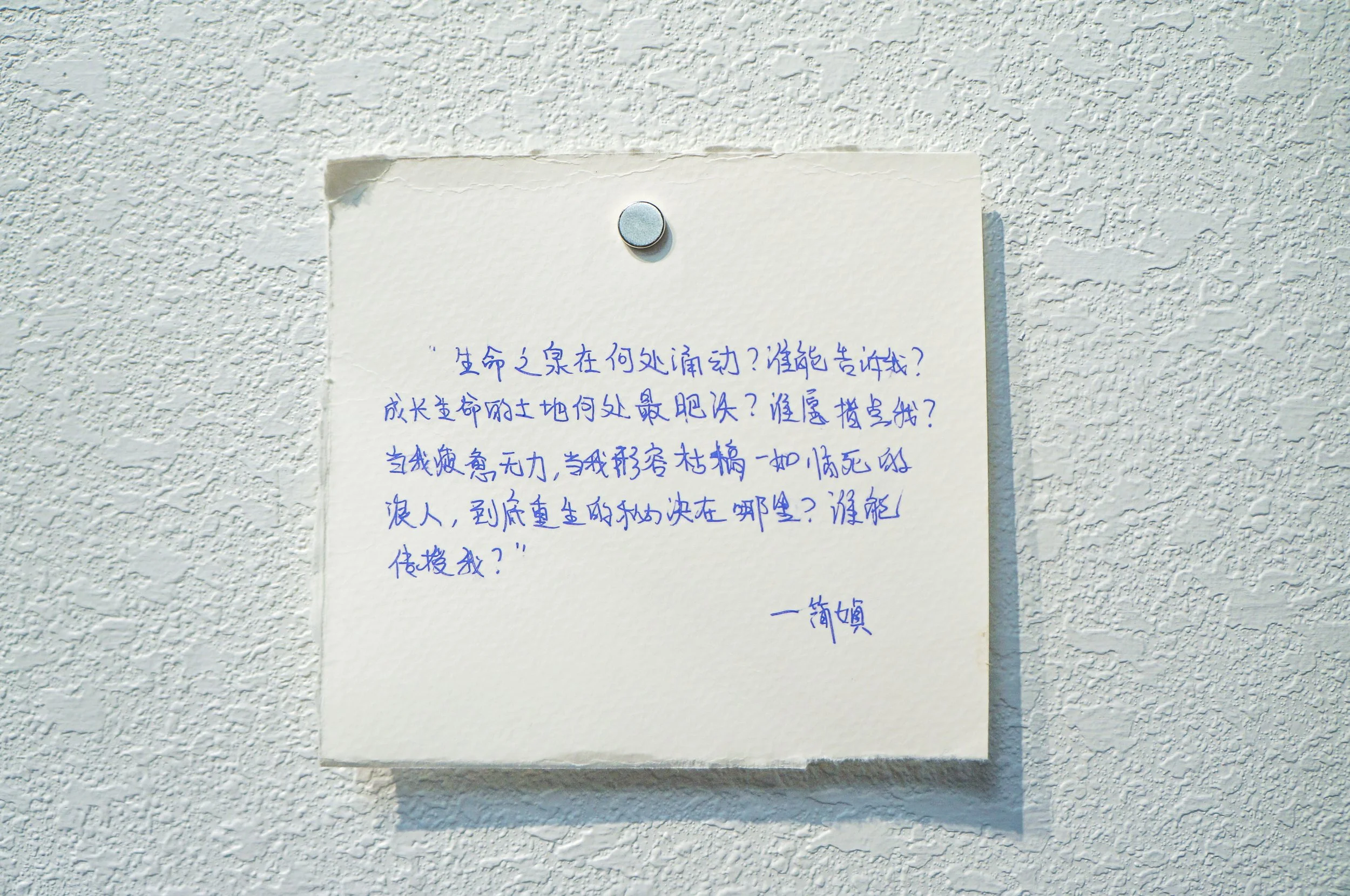
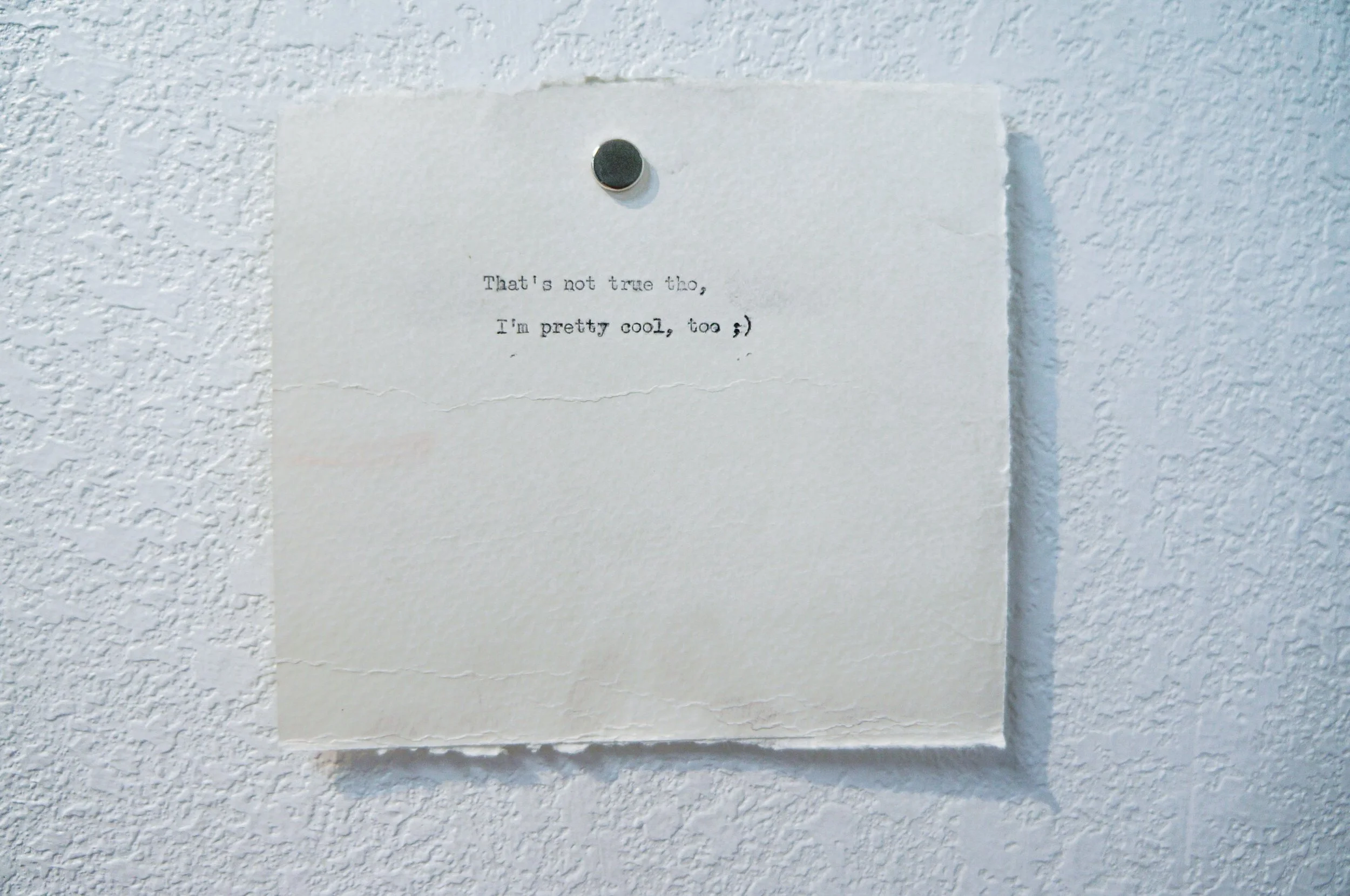
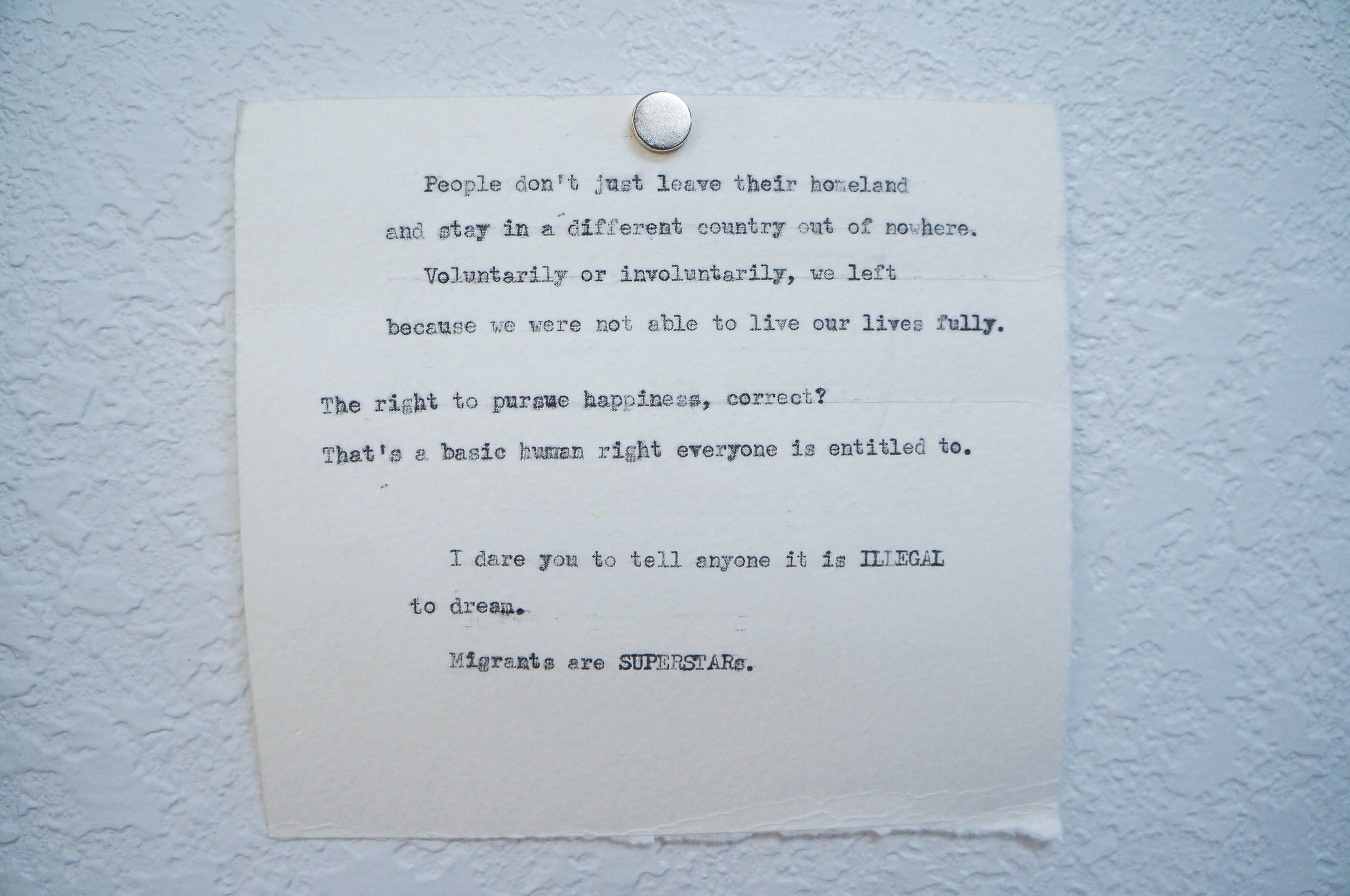
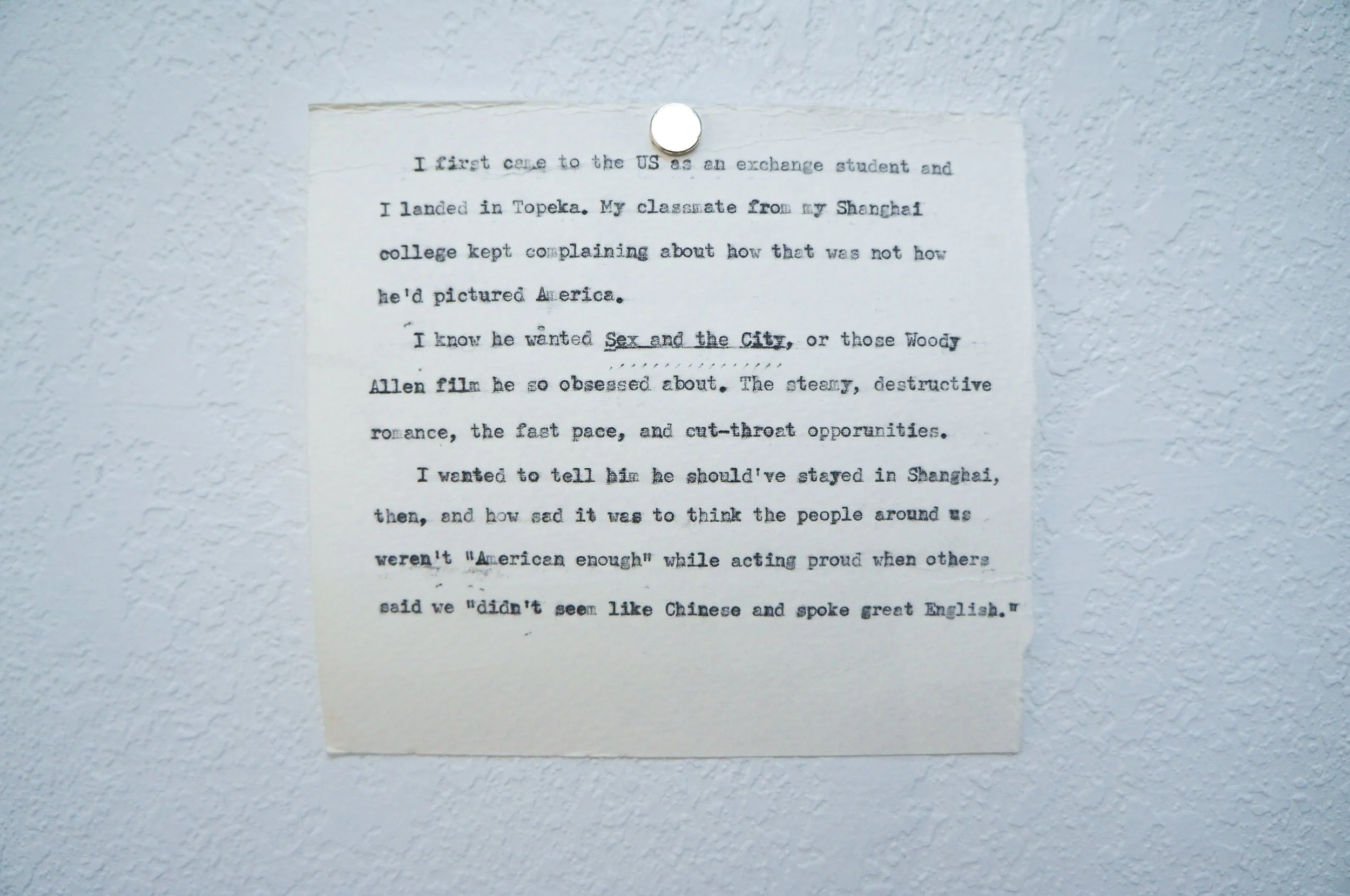
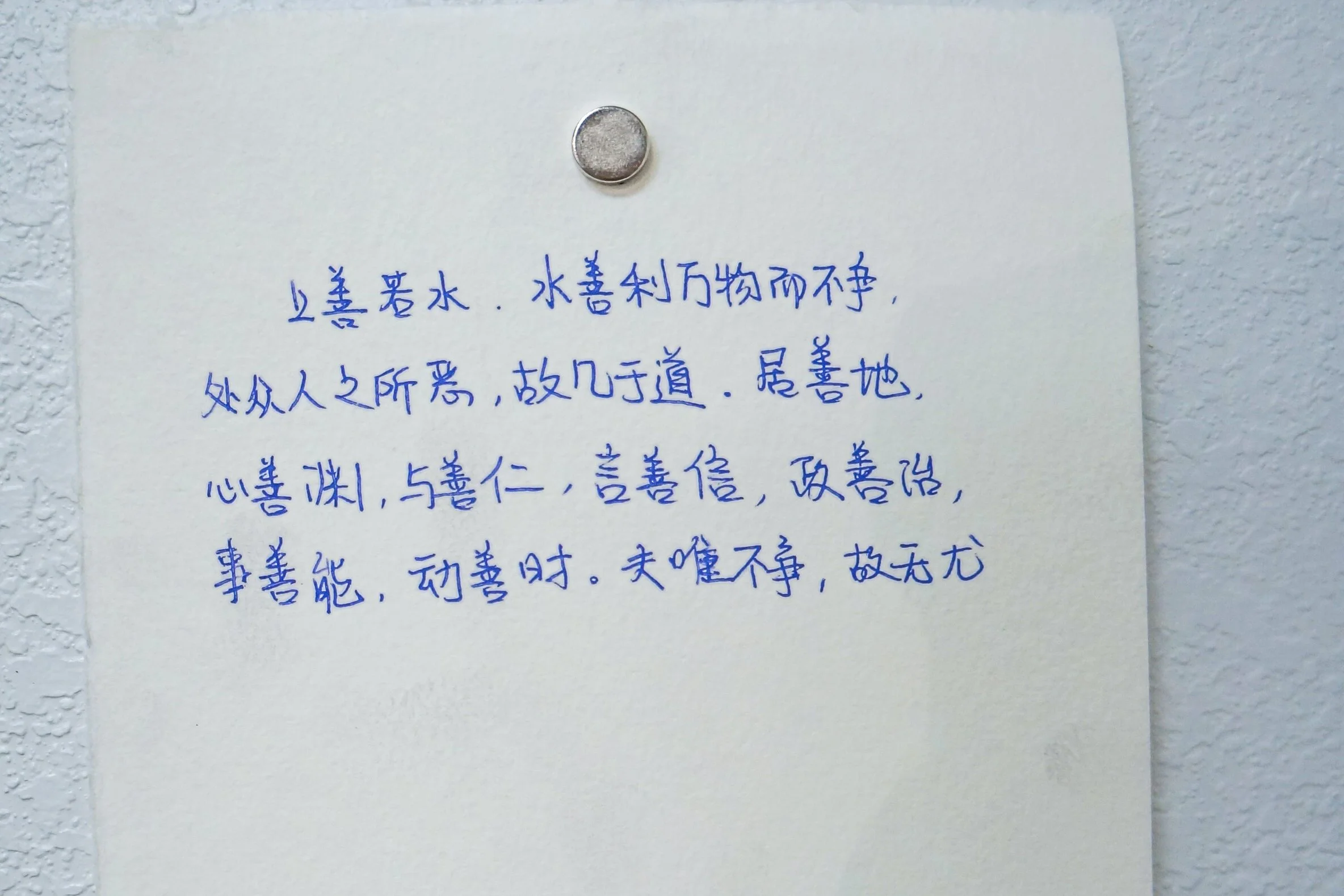
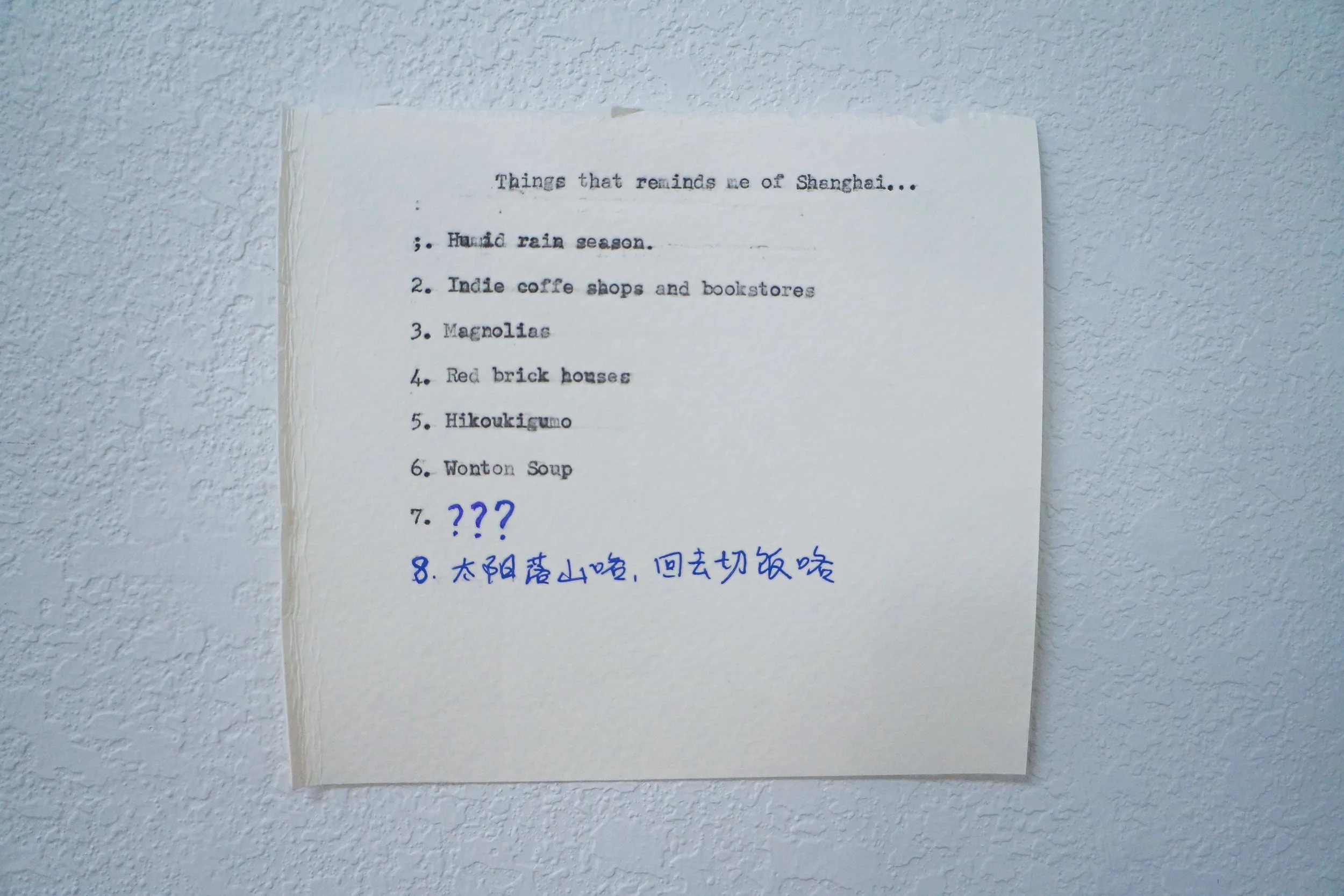
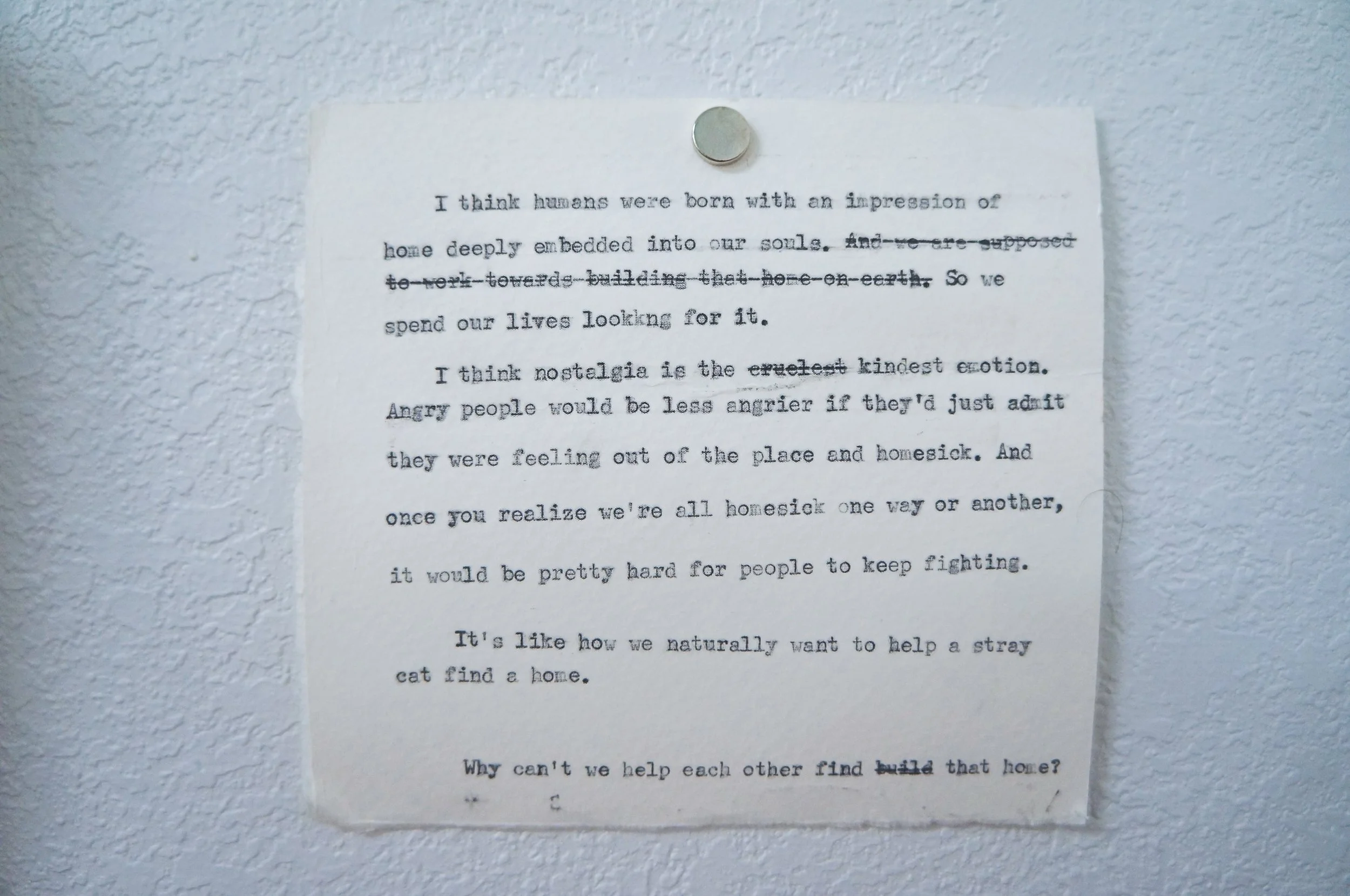
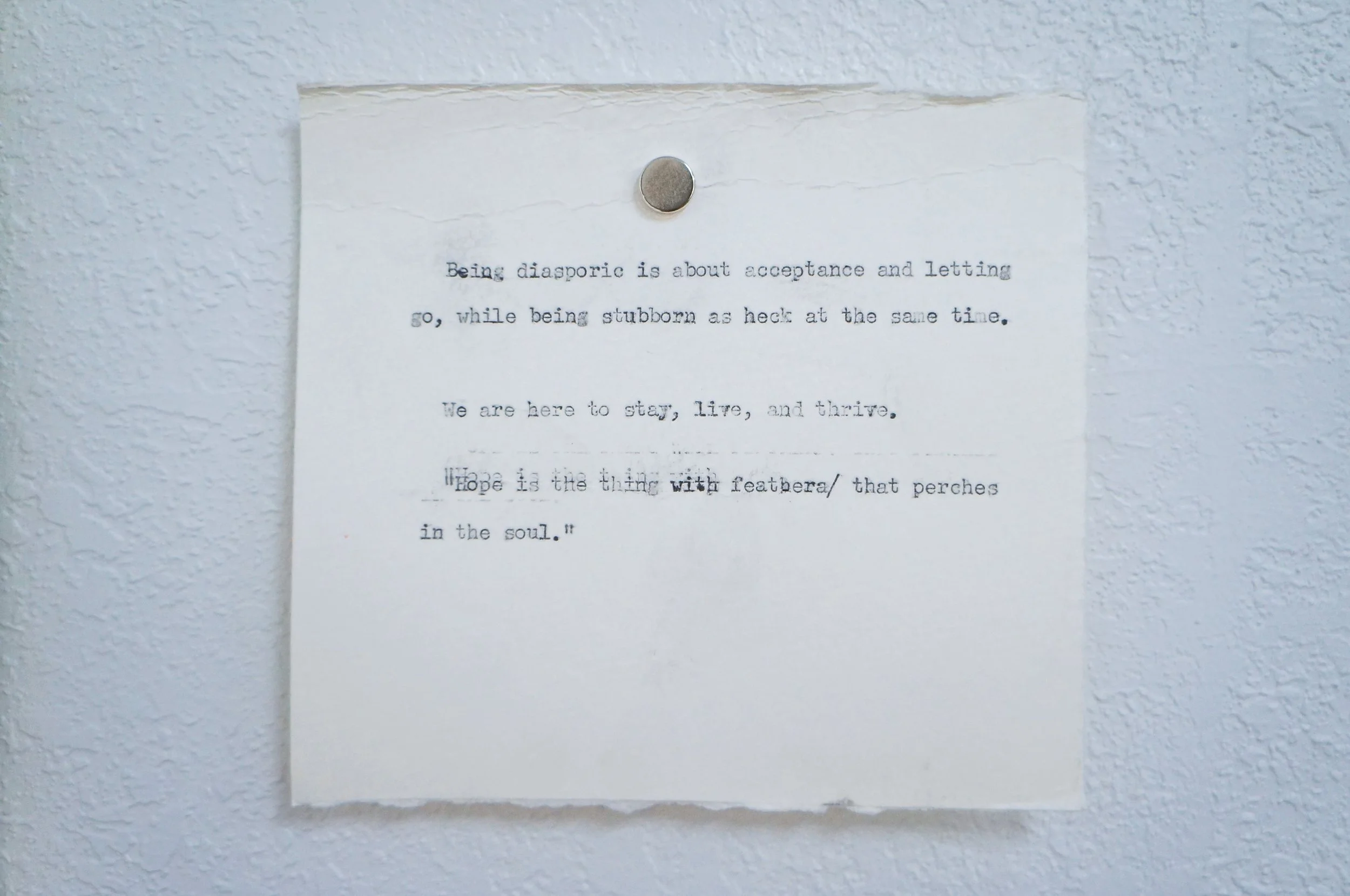
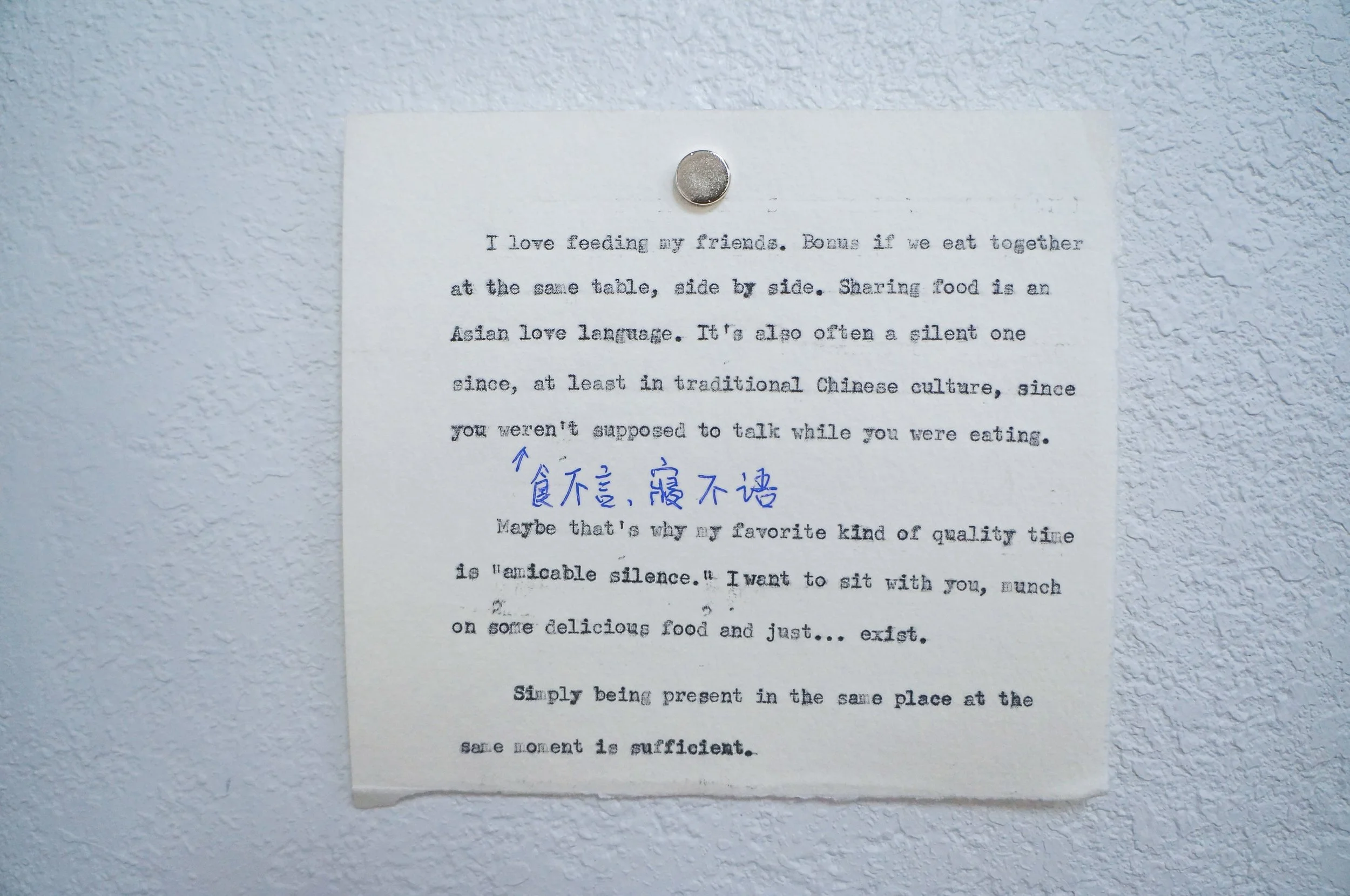
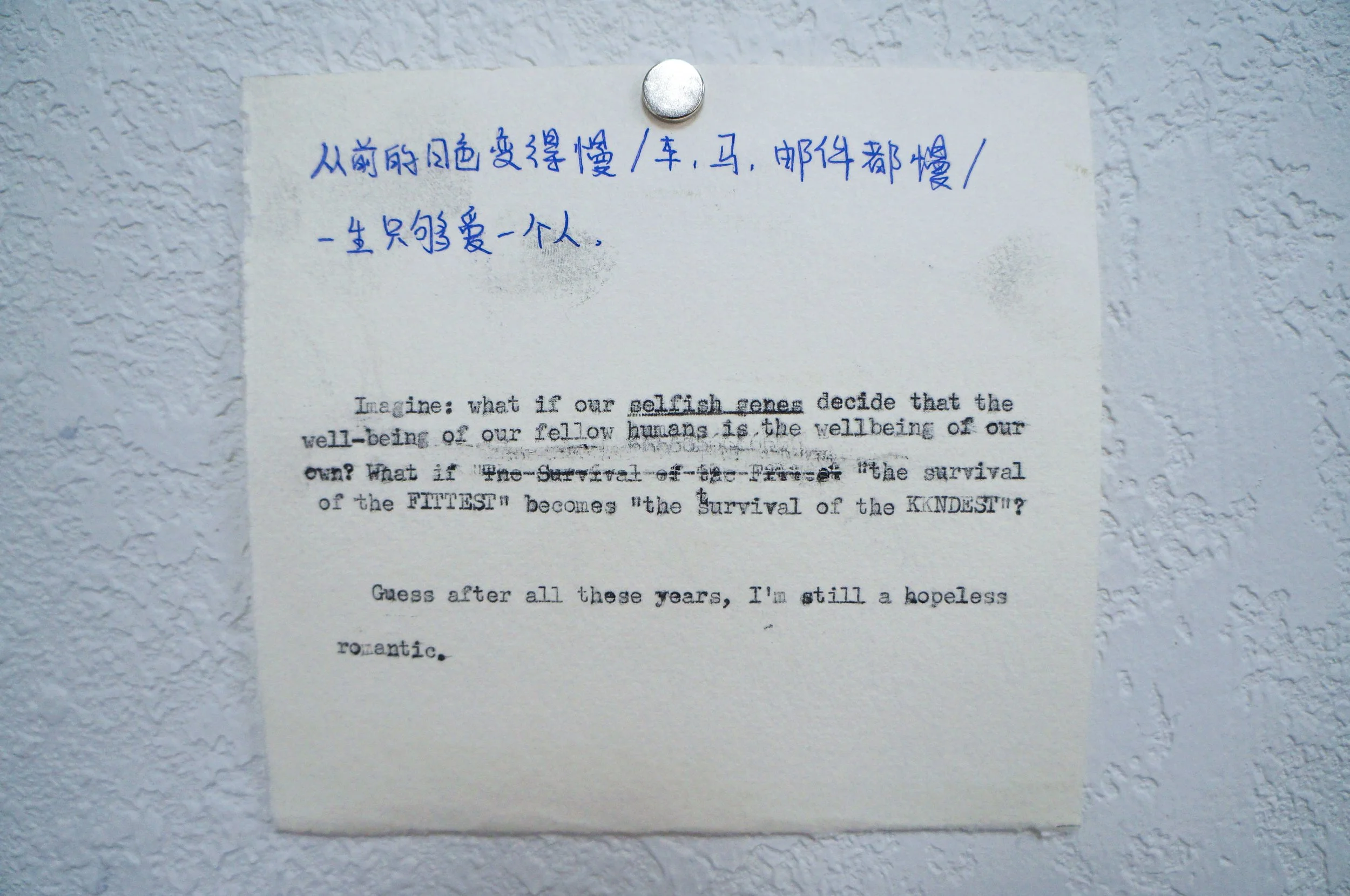
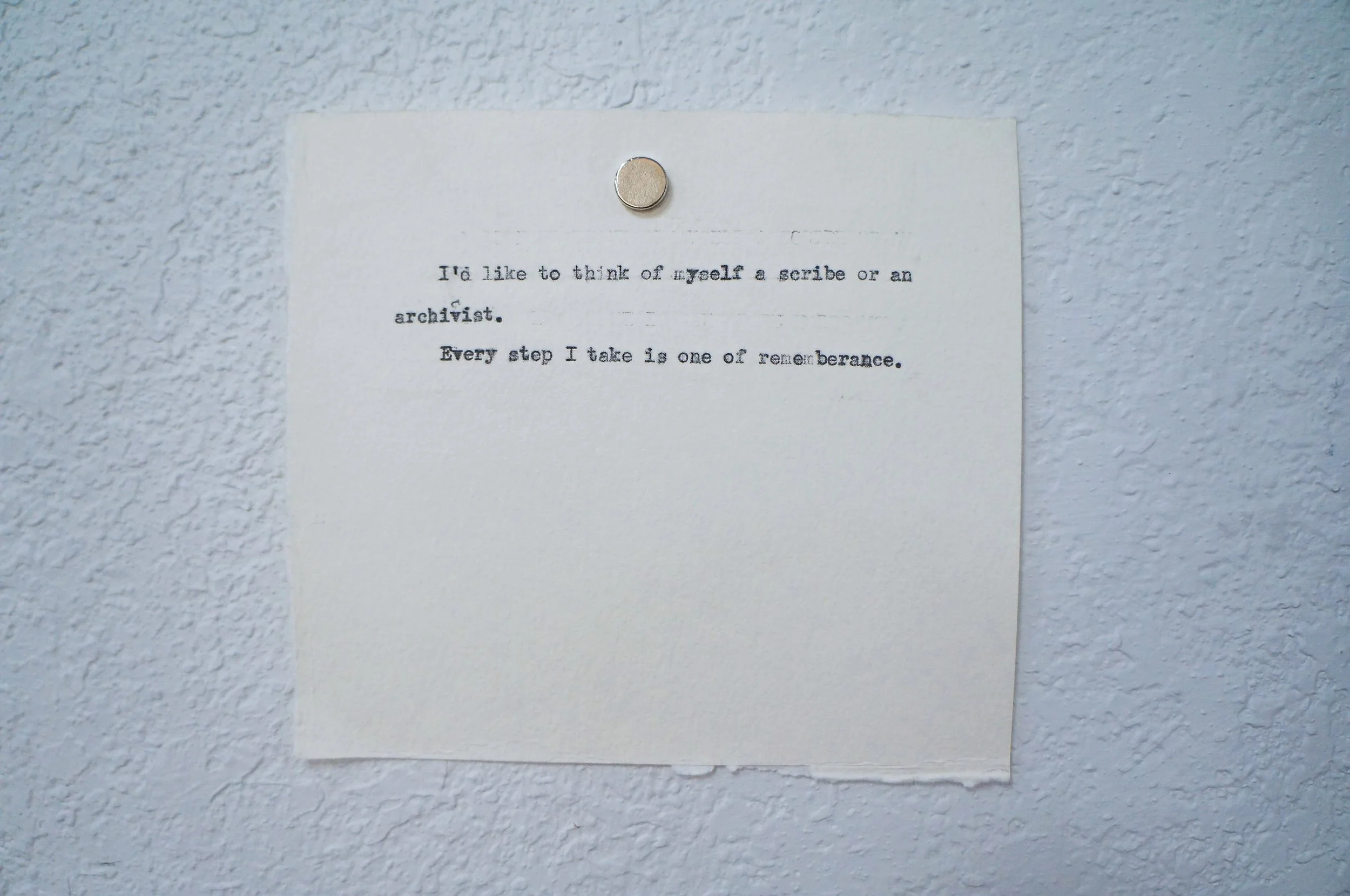
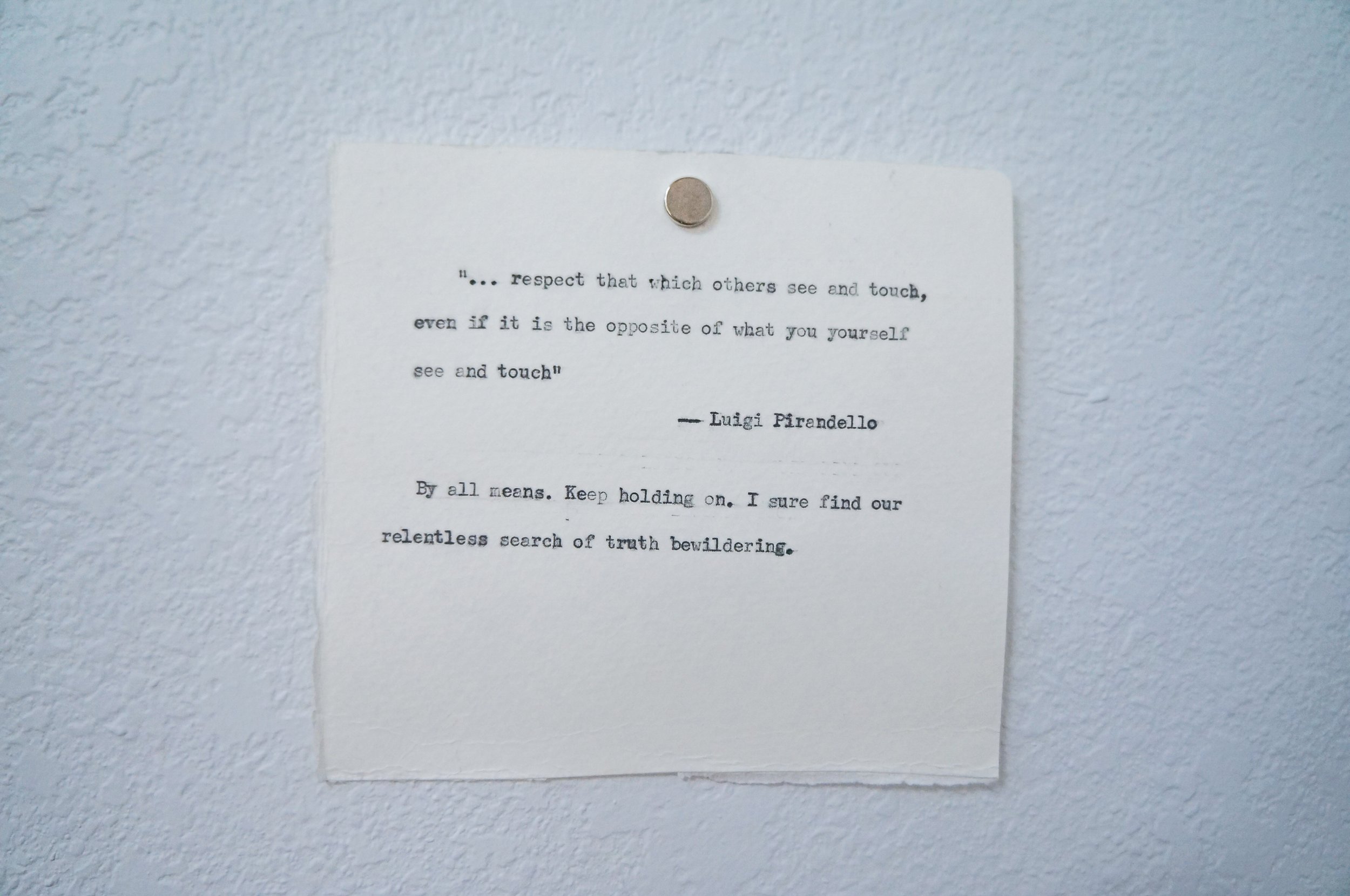
You will also find each piece with a short prose adjacent to it. These are annotations for each piece and can be read with or without the essay recording in the background.
When you reach the “end” of the gallery space, that is, when you come back to the main entrance of the gallery, you will find a blank wall inviting you to leave your own immigrant/diasporic story. This can be the story of yourself, your parents/grandparents, or ancestors. Write your story on one of the index cards on the pedestal nearby, then add it to one of the threads on the wall with the provided laundry clip. You can also add photos, objects, or anything else that can be securely clipped onto the threads.